


Dermal fillers offer a non-surgical solution to restore volume and refine facial contours. However, when results do not align with your expectations or unexpected issues arise, knowing your options is essential. Filler dissolving has become a pivotal procedure in modern aesthetic medicine, allowing individuals to safely reverse hyaluronic acid treatments. Whether you need to correct uneven symmetry, address product migration, or resolve a medical complication, understanding the dissolving process empowers you to make informed decisions for your safety and peace of mind.
What is filler dissolving and how hyaluronidase works
Reversing the effects of dermal fillers is a precise medical procedure that relies on specific enzyme interactions. Instead of waiting months for your body to metabolize hyaluronic acid naturally, targeted enzyme injections accelerate the breakdown process safely.
Definition of hyaluronidase filler dissolving
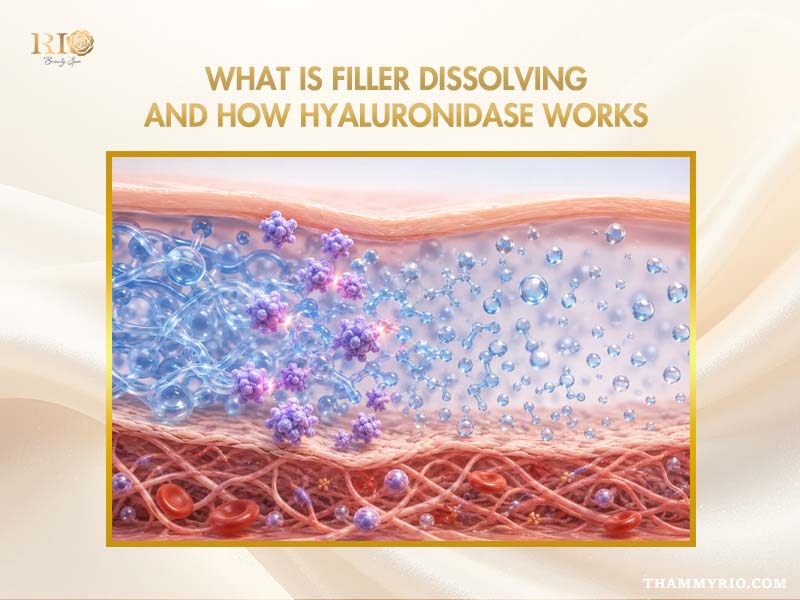
Hyaluronidase filler dissolving is an advanced aesthetic treatment that utilizes a naturally occurring enzyme called hyaluronidase. This enzyme acts by cleavage of the glycosidic bonds within hyaluronic acid (HA), rapidly degrading the cross-linked gel structure into harmless fluid that the body absorbs naturally. While hyaluronidase is highly effective for HA-based fillers, it is important to note that non-hyaluronic acid fillers (such as Radiesse or Sculptra) cannot be dissolved with this treatment. If you previously had chin filler or jawline filler made of hyaluronic acid, this enzyme can efficiently target and break down the unwanted product.
Where dermal filler goes after dissolving
When hyaluronidase breaks down hyaluronic acid, the filler breaks into small sugar molecules and water. The body naturally processes these fluid remnants through the lymphatic system, where they are eventually filtered by the kidneys and excreted naturally without harming surrounding tissues. This physiological breakdown begins almost immediately after injection, ensuring a smooth and natural transition back to your native tissue structure.
Key benefits of dissolving lip filler and facial fillers
Opting to dissolve dermal filler provides both cosmetic refinement and crucial health protection. It allows patients to reset their appearance, fix aesthetic oversights, and protect their tissue integrity.
Correcting migration and unwanted dissolving lip filler results
One of the most common reasons patients seek treatment is product displacement. Over time, poorly placed hyaluronic acid can shift outside the target area, creating an unnatural rim or lumpiness. Dissolving lip filler effectively reverses migration, heavy appearance, or asymmetrical proportions caused by overfilling. If you have experienced unevenness after getting lip filler, cheek filler, or nasolabial fold filler, dissolving allows you to restore your natural facial structure before attempting fresh, precise enhancements.
Treating medical emergencies and vascular complications
Beyond aesthetic concerns, hyaluronidase is a lifesaving emergency intervention in medical aesthetics. If a dermal filler is accidentally injected into a blood vessel—a condition known as vascular occlusion—it can block blood supply and lead to skin necrosis or severe tissue damage. Immediate emergency administration of hyaluronidase restores blood flow rapidly, preventing permanent complications. Practitioners handling complex areas, such as nose filler or under eye filler, always keep hyaluronidase readily available to ensure immediate intervention if dermal filler complications occur.
Who should dissolve dermal filler and when to act
Recognizing the key indicators for treatment ensures timely care and protects both your appearance and health.
Who is a suitable candidate for hyaluronidase injections?
You may be an ideal candidate for hyaluronidase filler dissolving if you experience any of the following:
- Persistent asymmetry or lumpiness that does not resolve after the initial post-injection swelling subsides.
- Overfilled or unnatural facial volume (often referred to as the “pillow face” effect).
- Filler migration beyond the vermilion border of the lips or under the thin lower eyelid tissue, causing dark circles or puffiness.
- Dissatisfaction with previous cosmetic treatments at other clinics.
Whether you previously treated delicate areas like temple filler or larger areas, dissolving provides a safe reset path.
Signs you need to dissolve dermal filler immediately
While cosmetic revisions can be scheduled at your convenience, medical emergencies require immediate action. Seek immediate medical attention if you notice any of the following:
- Severe, throbbing pain that escalates shortly after treatment.
- Blanching or pale/white spots on the skin, indicating compromised blood circulation.
- Blisters or dark purplish skin discoloration near the injection site.
- Vision changes or localized numbness, especially after procedures around the mid-face or nose.
How to dissolve dermal filler safely step by step
Achieving safe, predictable outcomes requires careful clinical assessment and adherence to medical standards.
Clinical process to dissolve dermal filler in practice
The professional dissolving process involves key structured stages:
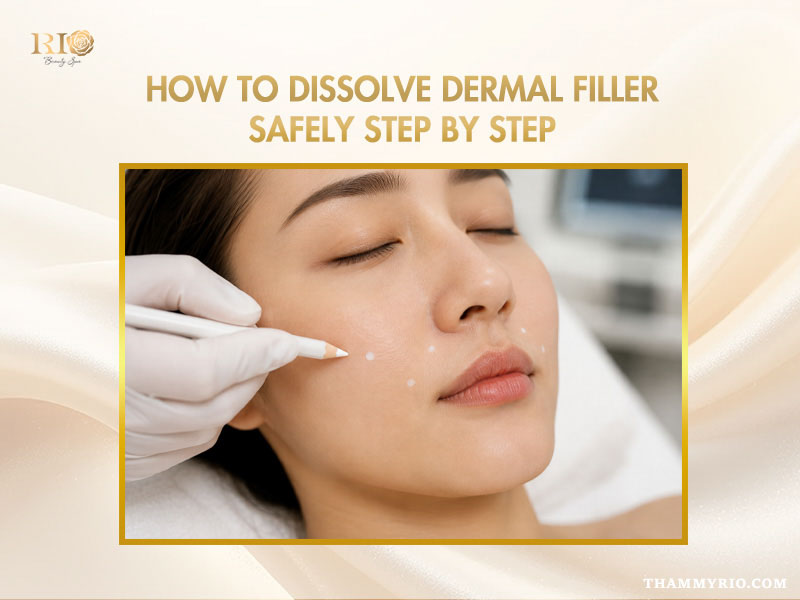
- Clinical Consultation & Mapping: The practitioner evaluates the treatment region, identifies the filler depth, and reviews your medical history.
- Topical Numbing: A mild anesthetic cream is applied to minimize discomfort.
- Precision Injection: Small, targeted doses of hyaluronidase are injected directly into the hyaluronic acid deposit using fine needles or micro-cannulas.
- Gentle Massage: The provider gently massages the area to distribute the enzyme evenly across the gel structure.
Patch testing and safety precautions before treatment
Safety is paramount during any enzyme treatment. Because hyaluronidase is a protein, a small percentage of individuals may experience an allergic response. A responsible practitioner performs a skin patch test—typically injecting a minute amount of enzyme into the forearm—and observes the site for 20–30 minutes for signs of redness, swelling, or hives. Establishing safety protocols ensures that treatments for both subtle areas and body treatments like breast filler or butt filler remain secure and comfortable.
Potential risks and side effects of dissolving filler
While hyaluronidase is standard practice, being aware of potential reactions helps you manage expectations and recovery.
Frequent mild reactions following hyaluronidase treatment
Most patients experience mild, temporary reactions following treatment, including:
- Localized Swelling & Redness: The enzyme activity and injection action temporary cause minor inflammation.
- Mild Bruising: Small bruises may form near needle insertion sites but fade within a few days.
- Temporary Tenderness: Slight sore sensations when touching the treated region.
Rare allergic reactions and long term risks
Severe complications are uncommon when proper patch testing and medical guidelines are followed. Nevertheless, possible risks may include:
- Allergic Reactions: Ranging from mild hives to rare anaphylactic responses in sensitive individuals.
- Temporary Natural Hyaluronic Acid Breakdown: Hyaluronidase can temporarily degrade a small amount of your body’s naturally occurring hyaluronic acid alongside the filler. Fortunately, your body continuously synthesizes native hyaluronic acid, restoring natural levels within a few days to weeks.
Recovery timeline of filler dissolving
Understanding the post-treatment timeline helps you plan your routine and schedule any future aesthetic enhancements safely.
- First 24 Hours: The enzyme breaks down the majority of hyaluronic acid rapidly. Swelling and mild redness peak during this window. Using a cold compress helps lower inflammation and ease swelling.
- Days 2 to 4: Bruising and swelling diminish significantly. The treated area begins to feel softer and settles into its natural state.
- Days 7 to 14: The full results of the dissolving procedure become clear. Any residual swelling disappears entirely, revealing your baseline facial contours.
- After 2 Weeks: If you plan to refill or try a new treatment, medical guidelines recommend waiting at least 14 days. This waiting period allows surrounding tissues to recover fully, ensuring fresh dermal fillers sit cleanly and predictably.
Understanding the safety standards, clinical process, and recovery expectations of filler dissolving empowers you to manage your aesthetic journey with confidence. Whether addressing cosmetic migration or rectifying an asymmetry, hyaluronidase provides a reliable and scientifically backed solution to restore your natural features smoothly. For detailed information on specialized aesthetic care, explore the services provided at Rio Beauty Clinic or read more about dedicated filler dissolving solutions.


Có thể bạn quan tâm:
Stop guessing your healed microblading outcome today
Seeing your final healed microblading eyebrows takes patience and proper care.
Can tattoo removal leave scars? Discover the truth
Regretting a piece of ink often leads to one primary concern:
Scar treatment methods you need to know now
Finding the right scar treatment methods is essential for individuals seeking
Scar treatment process guide: Secret to fast results
Navigating skin restoration requires a clear, structured roadmap. Understanding the standard
Top scar treatment clinic in Hanoi: How to choose
Finding a reliable scar treatment clinic in Hanoi requires careful evaluation
3 best lip neutralization near me in Hanoi
Finding a trusted aesthetic studio changes your appearance significantly, prompting the