


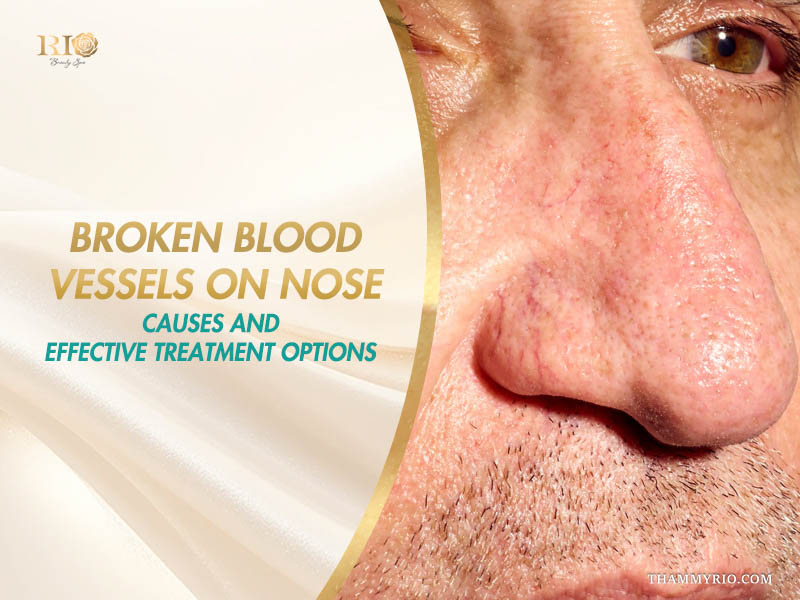
Visible red lines across the nose can be surprisingly difficult to hide. They may appear as tiny red dots, fine branching lines, or persistent red veins around the nostrils and nose bridge. Many people refer to them as broken blood vessels on nose, although the appearance can involve different types of superficial blood vessels.
For some individuals, the condition is primarily a cosmetic concern that affects the overall appearance of the skin. For others, recurring redness can become more noticeable after heat, sun exposure, exercise, alcohol, skincare irritation, or temperature changes.
Understanding what is causing the visible vessels is important because not every type of redness responds to the same approach. Topical skincare may support the skin barrier, while laser-based vascular treatments can target visible blood vessels more directly.
What are broken blood vessels on the nose?
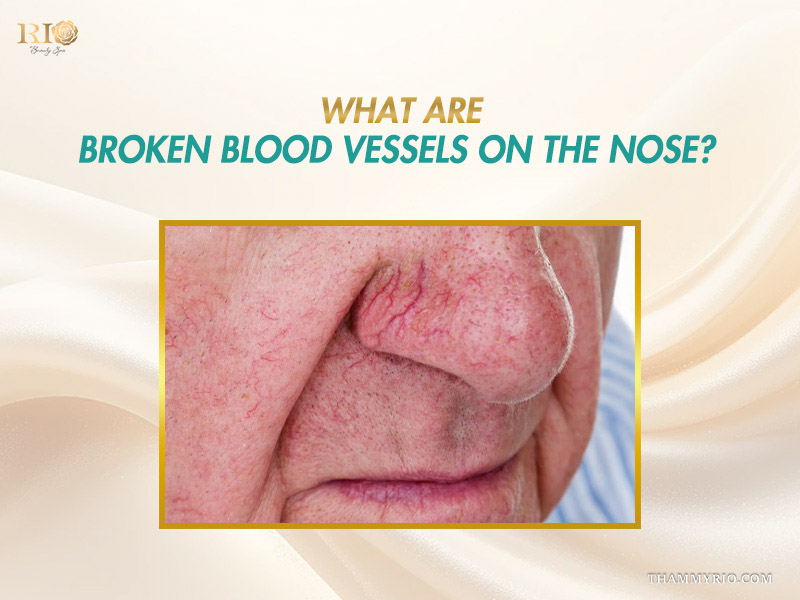
“Broken blood vessels on nose” is a common descriptive term for small, visible blood vessels appearing beneath the skin. In professional contexts, some of these visible vessels may be associated with telangiectasia, a condition in which small superficial blood vessels become permanently or persistently enlarged and visible.
They can appear around the nostrils, along the sides of the nose, or across the bridge. Their color may range from light pink to bright red or purplish-red depending on the vessel and depth.
The appearance alone does not always identify the exact type of vascular change. This is why terms such as broken capillaries, red veins, and spider veins are sometimes used interchangeably even though they may describe somewhat different visual patterns.
Understanding telangiectasia – the medical term for broken capillaries
Telangiectasia refers to visibly enlarged small blood vessels close to the skin surface. They can appear as fine red, pink, or sometimes bluish lines.
When people search for broken capillaries on nose, they are often looking for information about these visible superficial vessels rather than an actual physical “break” in the vessel.
Several characteristics may make telangiectasia more noticeable:
- Small, fine red blood vessels that appear as linear or branching patterns beneath the skin.
- Ongoing redness that remains noticeable around the nose rather than fading quickly.
- Multiple small vessels concentrated in one area.
- Increased visibility after heat, exercise, or irritation.
- A tendency to remain visible rather than disappearing quickly.
The underlying vascular structure matters when selecting an appropriate treatment approach. A product designed to soothe sensitive skin, for example, serves a different purpose from a vascular laser designed to target visible blood vessels.
Broken capillaries on nose vs. spider veins vs. red veins – key differences
The terms broken capillaries, spider veins, and red veins can overlap in everyday searches, but the visual pattern may differ.
Broken capillaries usually refers to small superficial vessels that appear as fine red lines or patches.
Spider veins typically have a branching or web-like pattern. On the face, they can be extremely fine and may resemble a small network of red vessels.
Red veins on nose is a broader consumer term. It can describe practically any visible red vascular line around the nose.
For someone searching for spider veins on nose or nose vein treatment, the important point is not simply the label. The depth, diameter, color, distribution, and surrounding skin condition can all influence which approach is appropriate.
What are the common causes of broken blood vessels appearing on the nose?
There is rarely one universal cause of broken blood vessels on nose. Several factors may contribute to the development or increased visibility of superficial vessels.
The nose is also an area that experiences frequent environmental exposure and temperature changes, making it particularly prone to visible redness and vascular changes.
The biological mechanism behind broken capillaries on the nose
Superficial blood vessels continuously respond to changes in blood flow and temperature. Repeated dilation, environmental stress, inflammation, or damage to surrounding skin structures can contribute to vessels becoming increasingly visible.
Once a superficial vessel has become persistently enlarged, ordinary skincare cannot necessarily make it disappear.
This distinction is important when comparing skincare with professional nose vein treatment. A moisturizer or barrier-supporting cream may improve the condition of the surrounding skin, but it does not function in the same way as a vascular laser that specifically targets blood vessels.
Common causes and risk factors for broken blood vessels on nose
Several factors may make visible vessels around the nose more likely or more noticeable:
- Sun exposure: Ultraviolet exposure can contribute to long-term changes in skin structure and vascular visibility.
- Temperature changes: Repeated exposure to hot and cold environments may make facial redness more noticeable.
- Skin irritation: Aggressive exfoliation or unsuitable skincare products may weaken the skin barrier and increase sensitivity.
- Genetic tendency: Some people naturally have more visible superficial vessels.
- Age-related changes: Skin structure changes over time, which can make underlying vessels easier to see.
- Hormonal changes: Hormonal fluctuations may influence vascular reactivity in some individuals.
- Lifestyle factors: Heat, intense exercise, alcohol, and other triggers can temporarily increase facial flushing.
- Repeated mechanical irritation: Frequent rubbing, squeezing, or aggressive cleansing around the nose can aggravate sensitive skin.
These factors do not necessarily mean that every person with red vessels has the same underlying cause. Instead, they help explain why visible vessels can gradually become more noticeable.
Why the nose area is particularly prone to broken capillaries
The nose is constantly exposed to sunlight, wind, temperature fluctuations, cleansing, makeup, and other environmental factors.
The skin around the nostrils may also experience repeated friction from tissues, masks, cleansing routines, or habitual touching.
Because superficial blood vessels can sit relatively close to the skin surface, even small vascular changes may become visually obvious.
This is one reason why broken capillaries on nose treatment needs to consider both the vessels themselves and the condition of the surrounding skin.
Are broken capillaries on the nose different from other visible veins?
Not every visible vessel on the face should automatically be classified as a broken capillary.
A person may notice a single red line, several branching vessels, diffuse redness, or a combination of these patterns. Different vascular structures can have different colors and depths.
This matters because a treatment approach that works well for one type of visible vessel may not be equally appropriate for another.
Broken capillaries vs. spider veins vs. red veins on the nose
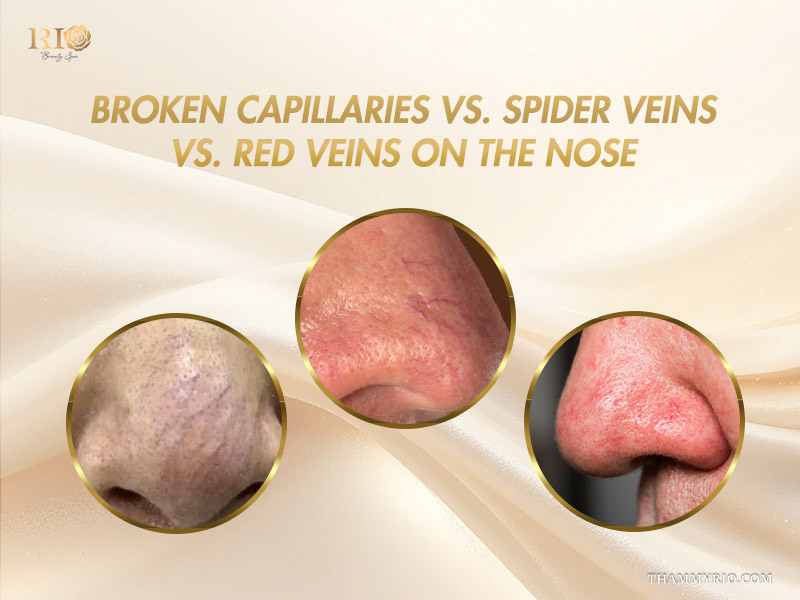
A simple way to understand these terms and how they differ is to look at their typical appearance:
| Appearance | Common description | Typical visual pattern |
| Fine red lines | Broken capillaries | Small, superficial linear vessels |
| Branching network | Spider veins | Web-like or radiating pattern |
| Persistent red lines | Red veins | General consumer description |
| Deeper or larger vessels | Visible veins | May look darker in color or appear more noticeable beneath the skin. |
These terms are useful for searching for information, but they should not be treated as a definitive identification based only on appearance.
Someone searching for nose vein removal may therefore encounter several different treatment options. The most appropriate approach depends on the characteristics of the visible vessels and the condition of the surrounding skin.
When visible nose veins may need professional assessment
Persistent or increasingly noticeable vascular changes deserve more careful evaluation when:
- The appearance changes significantly over a short period.
- Redness that remains noticeable for longer periods rather than occurring only occasionally.
- Several different vascular patterns appear together.
- The skin is highly sensitive or easily irritated.
- Previous cosmetic treatments have caused prolonged redness or pigmentation.
- Home skincare has not addressed the underlying concern.
The purpose of professional assessment is not simply to choose the strongest treatment. It is to determine whether the visible vessels are suitable for a cosmetic vascular treatment and what approach is most appropriate.
Treatment options for broken capillaries on nose – what actually works?
Treatment depends on the type and depth of the visible vessels, their distribution, and the condition of the surrounding skin.
There is no single solution that should automatically be applied to every case of broken blood vessels on nose.
Topical creams and home remedies – do they really work?
Skincare can play an important supporting role, especially when the surrounding skin is sensitive, dry, or easily irritated.
Gentle products may help maintain the skin barrier and reduce factors that make redness appear more pronounced. Sun protection is also important because UV exposure can contribute to ongoing skin stress.
However, creams should not be confused with vascular treatment.
A topical product generally does not directly eliminate an already visible dilated blood vessel. This is particularly relevant for people searching for the best cream for broken capillaries or a cream that can completely remove visible nose veins.
A more realistic skincare strategy is to focus on:
- Supporting the skin barrier.
- Keeping the skin adequately hydrated and moisturized.
- Using appropriate sun protection.
- Avoiding aggressive exfoliation when the skin is sensitive.
When the main concern is a clearly visible vascular structure, a professional vascular treatment may be considered instead of relying exclusively on topical products.
Laser therapy – the modern non-invasive solution for red veins on nose
Laser-based vascular treatment is designed to interact with blood vessels through targeted light energy.
Certain wavelengths are preferentially absorbed by hemoglobin within blood vessels. The resulting thermal effect can help coagulate or disrupt the targeted vascular structure while the surrounding tissue is managed according to the treatment parameters.
This makes vascular laser technology particularly relevant to people searching for:
- Effective ways to treat broken capillaries on the nose
- red veins on nose
- nose vein treatment
- nose vein removal
- Laser-based treatment for visible spider veins
Different laser wavelengths can target vessels at different depths and sizes. Therefore, the technology used and the settings selected are important parts of the treatment process.
Why laser technology is the gold standard for broken capillaries on nose
The term “gold standard” should not be interpreted as meaning that one laser is appropriate for every person. Rather, vascular laser technology has become an important professional option because it can directly target visible vascular structures.
For the nose, precision is particularly important because the area contains delicate facial skin and highly visible vessels.
A suitable vascular laser system can offer several advantages:
- Targeted interaction with visible blood vessels.
- Different wavelength options for different vascular depths.
- More controlled treatment than purely topical approaches.
- Ability to adapt parameters according to the vascular pattern.
- A non-surgical approach for many superficial vascular concerns.
The key is therefore not simply choosing “a laser”, but selecting appropriate technology and parameters for the specific vascular presentation.
Advanced vascular laser technology at Rio Beauty Clinic
After understanding the available treatment approaches, the next consideration is how a provider combines technology, expertise, and aftercare.
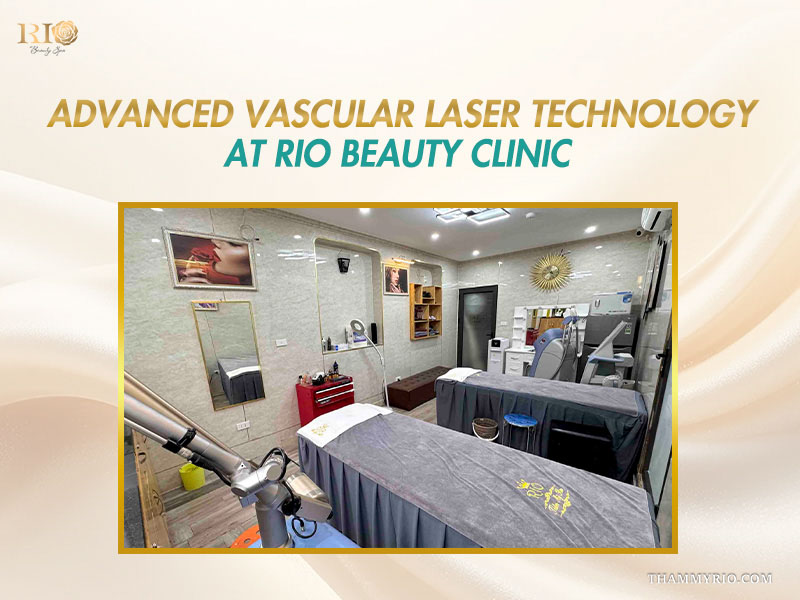
At Thẩm Mỹ Rio Beauty Clinic, the vascular treatment system is presented as a multi-wavelength approach rather than relying on one wavelength for every type of visible vessel. The available brand materials identify Rio Vascular Laser System and several vascular laser technologies used within this treatment ecosystem.
The Rio vascular laser system – a multi-wavelength powerhouse
The Rio Vascular Laser System is designed around multiple wavelengths to address vascular structures at different depths.
The technology ecosystem described by Rio includes:
- Vbeam Candela 595nm – a vascular laser technology associated with superficial vascular concerns.
- Bio Vein Clear Max 980nm – a 980nm vascular laser platform.
- BV Vascular Pro 980nm/1470nm – a multi-wavelength vascular laser system.
- Long-Pulsed Nd:YAG 1064nm – a longer-wavelength option that can be used for deeper vascular structures.
The principle is selective photothermolysis: light energy is absorbed by hemoglobin, producing thermal energy that targets the vascular structure.
For people with broken blood vessels on nose, this multi-wavelength approach is relevant because visible vessels are not necessarily identical in diameter or depth.
More information about the technology can be found through the dedicated Rio Vascular Laser System page.
Personalized Treatment Plans from Expert Dermatologists and Laser Specialists
Technology alone doesn’t deliver results – it requires the expertise of experienced practitioners.
At Rio, your treatment is managed by our team of highly qualified specialists:
Expert Dermatologist Vương Mỹ brings over 16 years of dermatological experience, specializing in skin assessment and vascular conditions. She personally evaluates each patient’s skin condition, identifies the underlying causes of broken capillaries, and develops a comprehensive treatment strategy.
Artist Grand Master Phạm Thanh Tâm, with over 16 years of experience in dermatology and aesthetics, oversees the overall treatment direction, ensuring that each protocol is optimized for the patient’s individual needs.
Expert Laser Specialist Trần Mạnh Thắng has over 20 years of experience training thousands of doctors nationwide in laser technology. He personally operates the equipment, adjusting parameters precisely to ensure safety and optimal results for the delicate nasal area.
This combination of dermatological knowledge and laser expertise ensures comprehensive, safe, and effective treatment for broken capillaries on the nose.

Post-treatment care with Everly – the recovery solution
Laser treatment is only one part of the overall skincare journey. After a vascular laser session, the surrounding skin may need a gentle recovery-focused routine.
Everly is a specialized skincare product used alongside vascular laser procedures. According to the supplied product information, it is intended to support soothing, hydration, skin-barrier recovery, and post-inflammatory pigmentation management after laser treatment.
The product information also states that Everly is not a substitute for sunscreen and recommends combining it with SPF 50+ protection. It also advises avoiding strong active ingredients such as AHA, BHA, and retinol for a period after laser treatment, depending on the skincare guidance provided.
For readers interested specifically in post-laser skincare, the dedicated Everly post-laser skincare page provides more detailed information.
The other technology pages can also be referenced when comparing vascular laser platforms:

Broken blood vessels on nose are commonly used to describe visible superficial vessels around the nose, but the underlying vascular pattern can vary from fine capillaries to branching spider-vein-like structures or persistent red veins.
Sun exposure, skin irritation, temperature changes, aging, genetic factors, and other triggers may contribute to their visibility. Gentle skincare and sun protection can support the surrounding skin, but topical products should not be expected to directly remove established visible vessels.
For people considering broken capillaries on nose treatment, vascular laser technology offers a targeted option that can be adapted according to vessel characteristics and skin condition. The choice of wavelength, equipment, treatment parameters, and aftercare all matter.
At Rio Beauty Clinic, the Rio Vascular Laser System combines multiple vascular laser technologies, while the brand’s professional team and Everly post-laser skincare solution form part of the broader treatment and recovery approach.
If visible red veins around your nose are becoming a persistent cosmetic concern, an individualized consultation can help determine whether skincare support or a professional vascular laser approach is more appropriate for your situation.
Thẩm Mỹ Rio Beauty Clinic
- Address: 205 Thuy Ke, Tay Ho, Ha Noi
- Email: Telesale.riostudio1@gmail.com or thammyrio999@gmail.com
- Hotline & WhatsApp: +8496.694.1999 or +84963.246.533
- Instagram: https://www.instagram.com/tham.my.rio.beauty.clinic/
- Fanpage: https://www.facebook.com/thammyriobeauty


 “Phạm Thanh Tâm” Đã kiểm duyệt nội dung
Có thể bạn quan tâm:
Best dermal fillers in Hanoi: 2027 clinic guide
Navigating aesthetic treatments in a vibrant foreign city can feel overwhelming,
Dermal filler cost: 2027 price guide and breakdown
Navigating aesthetic treatments requires a clear understanding of financial requirements as
Nose filler: Get a defined profile without surgery
Achieving a balanced and harmonious facial profile no longer requires going
2 Comments
Breast filler safety and complete guide
Choosing a non-surgical approach to enhance body contours has become increasingly
Jawline fillers: Sculpt your jaw with instant results
Achieving a structured lower face without surgery has become one of
Filler dissolving: Complete guide and safety tips 2027
Dermal fillers offer a non-surgical solution to restore volume and refine