


Living with an unwanted tattoo often brings persistent emotional discomfort, especially when outdated ink, faded lines, or visible pigment shifts affect your personal confidence and professional wardrobe choices. Many people believe their only options are painful, prolonged removal cycles or dense, dark cover-up artwork that simply replaces one noticeable image with a larger, darker design.
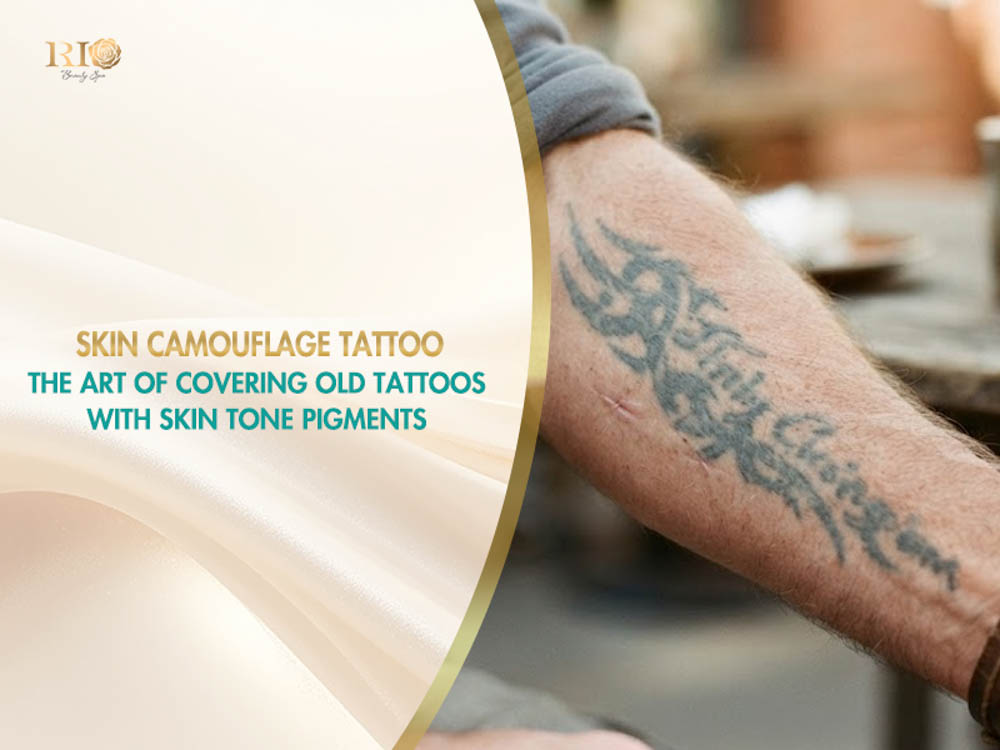
However, modern aesthetic procedures provide an elegant, refined alternative: a specialized skin tone tattoo cover up designed to restore your natural appearance. By depositing flesh-toned organic pigments into the dermal layers, paramedical specialists can neutralize residual color and create a balanced surface that blends smoothly with the surrounding tissue.
What is skin camouflage tattoo and how does it work on old tattoos?
Skin camouflage tattooing, clinically termed paramedical micropigmentation, is a specialized cosmetic technique that implants formulated pigments matching your individual complexion into the upper dermis. Rather than creating decorative patterns, the sole purpose of this approach is optical concealment and tone normalization.
When addressing previous body art, the practitioner does not simply “paint over” the existing design with opaque ink. Instead, the process relies on color theory and micro-implantation. The deposited pigments work to refract light, scattering visual contrast and creating an optical illusion that neutralizes dark undertones.
Over progressive sessions, a professional skin tone tattoo cover up diffuses harsh ink borders and restores a natural, even dermal appearance.
The science behind skin tone pigment matching
Achieving an imperceptible finish demands far more than selecting a standard beige pigment from a shelf. Human skin consists of complex undertones—warm, cool, and neutral—dictated by varying ratios of melanin, hemoglobin, and carotene.
To execute a flawless tattoo camouflage with skin tone, specialists analyze the client’s skin under balanced daylight conditions, factoring in seasonal sun exposure, tissue hydration, and vascular circulation.
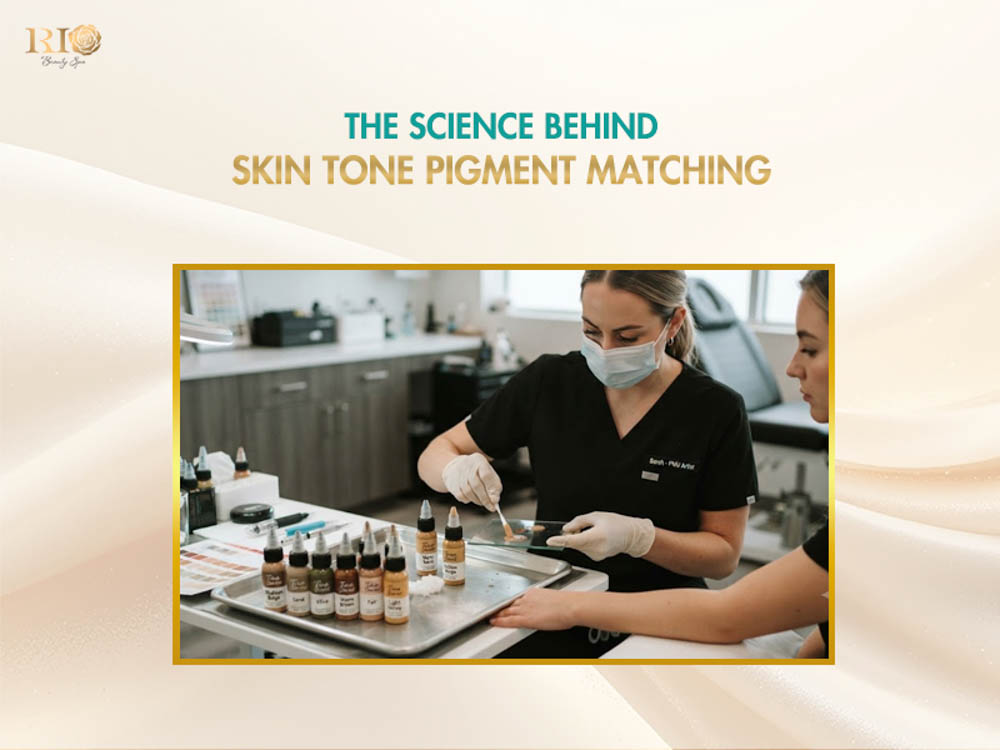
The practitioner blends complementary shades to counteract the residual base colors of the old tattoo before applying the target complexion tone:
- Warm peach and golden tones: Used to cancel cool blue, gray, and charcoal hues.
- Neutral olive balances: Applied to neutralize stubborn violet or reddish undertones.
- Custom calibrated base pigments: Layered systematically to match the natural surface skin tone precisely.
Why old tattoos become a problem: understanding the emotional and aesthetic impact
Body art is often tied to specific chapters of life. As personal styles evolve, careers progress, or interpersonal relationships change, old tattoos can transform from cherished symbols into unwelcome reminders.
The psychological weight of concealing visible ink beneath heavy clothing, bandages, or thick cosmetic foundations creates daily friction that extends far beyond aesthetics.
Common reasons people want to cover up old tattoos
The motivation to pursue a skin tone tattoo cover up typically stems from several practical and lifestyle considerations:
- Faded or blurred linework: Aging ink expands over decades, losing contrast and sharpness.
- Incomplete laser clearance: Laser sessions may successfully fragment black pigments but leave behind faded greens, pale blues, or milky ghosting.
- Professional dress codes: Formal workplaces, corporate environments, or public sector vocations often require ink-free skin on visible areas like forearms, necks, and hands.
- Emotional closure: Removing names, symbols, or artistic representations tied to past relationships helps individuals regain emotional peace.
The difference between tattoo removal and skin camouflage tattoo
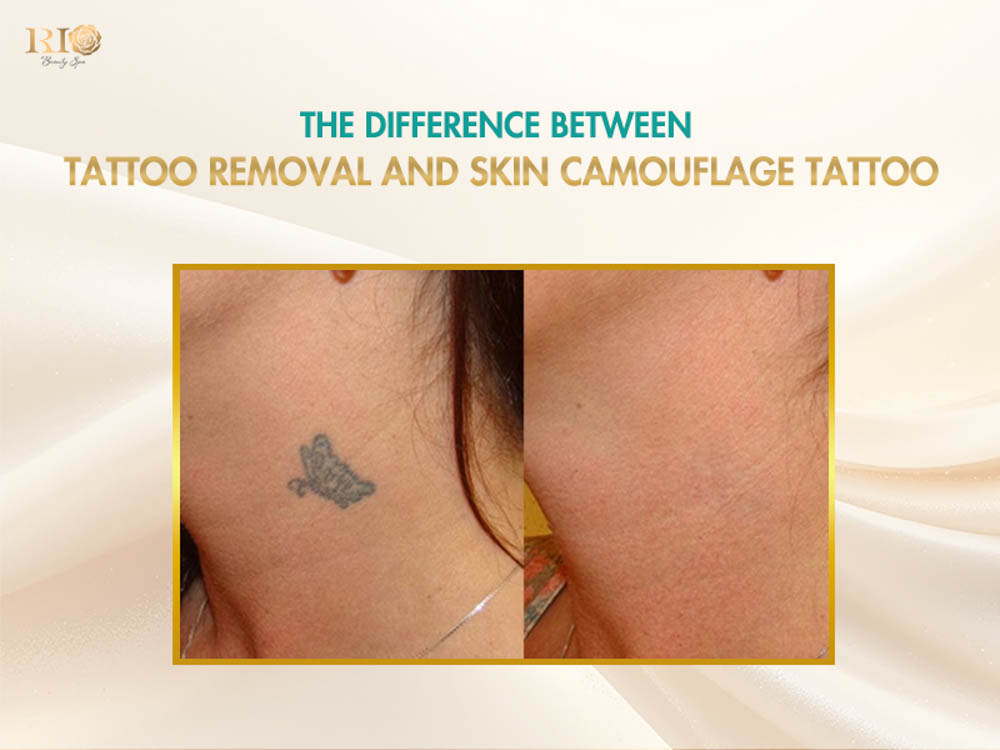
Understanding your aesthetic options requires distinguishing between ink destruction and pigment blending. Many clients assume they must endure dozens of blistering laser treatments to achieve clear skin, yet the comparative table below highlights how their mechanisms differ:
| Factor | Complete Laser Removal | Skin Tone Tattoo Cover Up |
| Core Mechanism | High-energy photothermal pulses fragment ink particles for lymphatic clearance | Implantation of custom organic flesh-toned pigments into the upper dermis |
| Best Suited For | Dense, dark black tattoos on undamaged skin tissue | Faded tattoos, residual ink, post-laser ghosting, and scarred skin areas |
| Session Discomfort | Intense photothermal sensation often requiring extended recovery | Minimal sensation managed with topical aesthetic balms; gentle micro-needling |
| Visual Endpoint | Complete clearance or partial ghosting with potential hypopigmentation risks | Natural dermal tone restoration blended directly with surrounding skin |
Skin tone tattoo cover up techniques: from camouflage to complete coverage
No single technical approach works across all skin types and tattoo conditions. An experienced practitioner selects an appropriate method based on the age of the tattoo, the depth of the initial needle penetration, and the density of the residual pigment.
Full camouflage technique: when skin tone completely replaces old tattoo pigment
For tattoos that are already faint, aged, or substantially cleared through prior interventions, a full skin colored tattoo cover up can be applied across the entire site. The specialist uses micro-stippling or pointillism to deposit fine clusters of biocompatible pigment across the treatment area.
This multi-pass technique deposits pigments incrementally, building up an opaque veil that masks the residual design. This makes the skin camouflage tattoo cover up virtually undetectable from conversational distances.
Blending technique: merging old tattoo pigment with surrounding skin
When an old tattoo covers a wider surface or features variable shading, an aggressive block of solid color can look flat or artificial. In these situations, the artist employs a specialized feathering technique known as tattoo camouflage with skin tone.
By applying soft gradient saturation along the outer perimeter, the practitioner breaks up linear edges and diffuses contrast. This technique softens dark boundaries so the treated area mirrors the natural color transitions of surrounding dermal tissue.
Layering technique: combining laser and skin camouflage for complex cases
Attempting a skin tone tattoo to cover tattoo pigment that is dense, dark black, or freshly applied usually causes visual muddying. Dark carbon particles eventually migrate or refract through light layers of flesh-toned pigment.
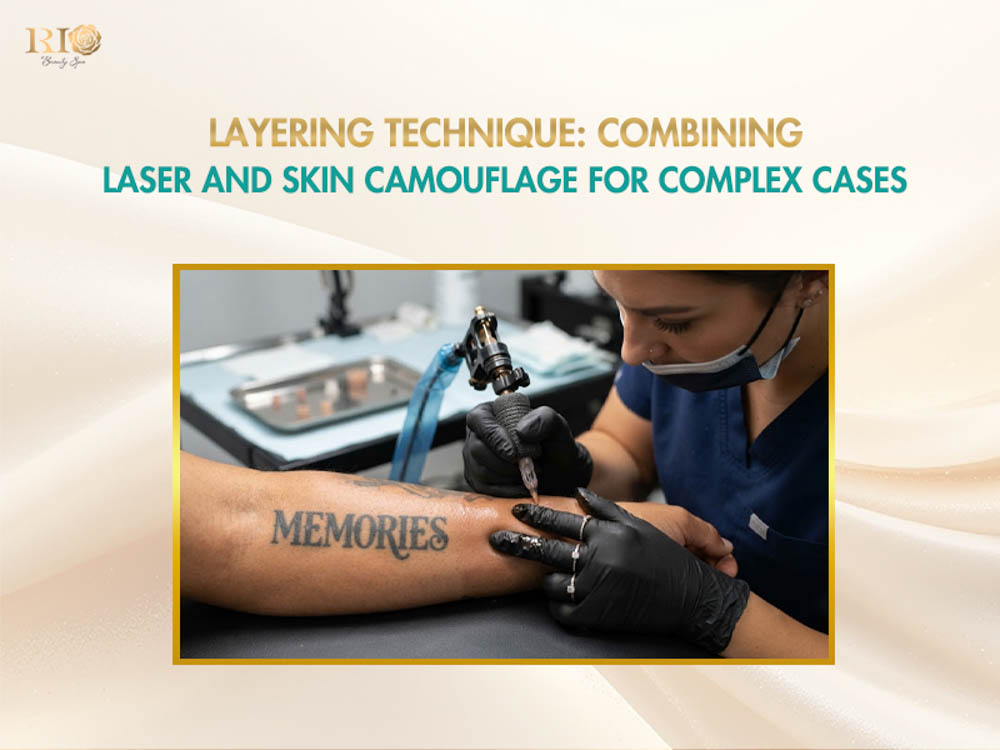
To overcome this challenge, complex cases use a phased clinical protocol:
- Lightening phase: Advanced laser sessions break down heavy pigment clusters and clear dense shading.
- Resting phase: The dermal tissue rests for 8 to 12 weeks to complete lymphatic clearance and stabilize cellular structure.
- Restorative camouflage: The specialist applies a skin tone tattoo after laser tattoo removal to neutralize residual shadows, cover uneven pigment pockets, and match the original skin tone.
The role of technology and pigments in skin camouflage tattoo for old tattoos
The long-term success, color fidelity, and structural safety of a skin tone tattoo cover up rely entirely on the quality of the technical equipment, pigments, and aftercare products utilized during the procedure.
Modern laser platforms supporting skin camouflage preparation
Preparing a stable dermal canvas often requires reducing pigment saturation first. Working with modern laser platforms allows specialists to lighten underlying ink safely without creating scar tissue or thermal burns.
Utilizing advanced multi-wavelength systems such as the Rio Laser Ultra Series allows practitioners to target diverse color spectra efficiently:
- Q-Switched Nd:YAG (1064nm): Penetrates deeply to shatter dense black and charcoal carbon pigment clusters without damaging surface epidermis.
- Ruby Laser Alpha6 (694nm): Targets notoriously stubborn green, sky-blue, and teal pigments that resist standard laser frequencies.
- Picotech fractional handpieces: Deliver ultra-short picosecond pulses to pulverize residual micro-particles while preserving healthy surrounding tissue.
Organic pigments and skin tone matching for natural results
The composition of the pigment suspension is critical to safety and longevity. Conventional decorative tattoo inks often contain heavy metal oxides, including titanium dioxide or iron oxides, which can oxidize and shift toward unappealing chalky, yellow, or greenish hues over time.
In contrast, an advanced skin color tattoo to cover tattoo protocol exclusively uses medical-grade organic pigments. Formulations from internationally recognized laboratories (such as Perma Blend, Kokkai, and Labina) are free of toxic impurities, biocompatible, and rigorously certified under FDA and European REACH standards.
These stable formulations maintain color integrity under UV exposure, resisting sudden shade shifts as the skin matures.
Aftercare products that lock in pigment and support skin recovery
The final color retention of your treatment depends heavily on how the skin is protected during the initial healing window. Using heavy, pore-clogging petroleum ointments can trap excessive heat, disrupt cellular respiration, and prematurely pull pigment out of the healing dermis.
Specialists recommend dedicated post-procedure balms such as Tattoo Pill aftercare cream, an imported German formula developed specifically for micro-pigmented skin. Enriched with panthenol, essential fatty acids, and soothing botanicals, it maintains moisture balance, reduces redness, and locks in pigment retention during epidermal regeneration.
Why Rio Beauty Clinic is the trusted address for skin camouflage tattoo
Selecting an aesthetic clinic for a delicate procedure like an intimate or visible skin tone tattoo cover up requires careful evaluation of technical expertise, hygiene protocols, and clinical experience. With more than two decades of dedicated practice in Hanoi, Rio Beauty Clinic has established itself as an authoritative center for corrective micropigmentation and dermal tone restoration.
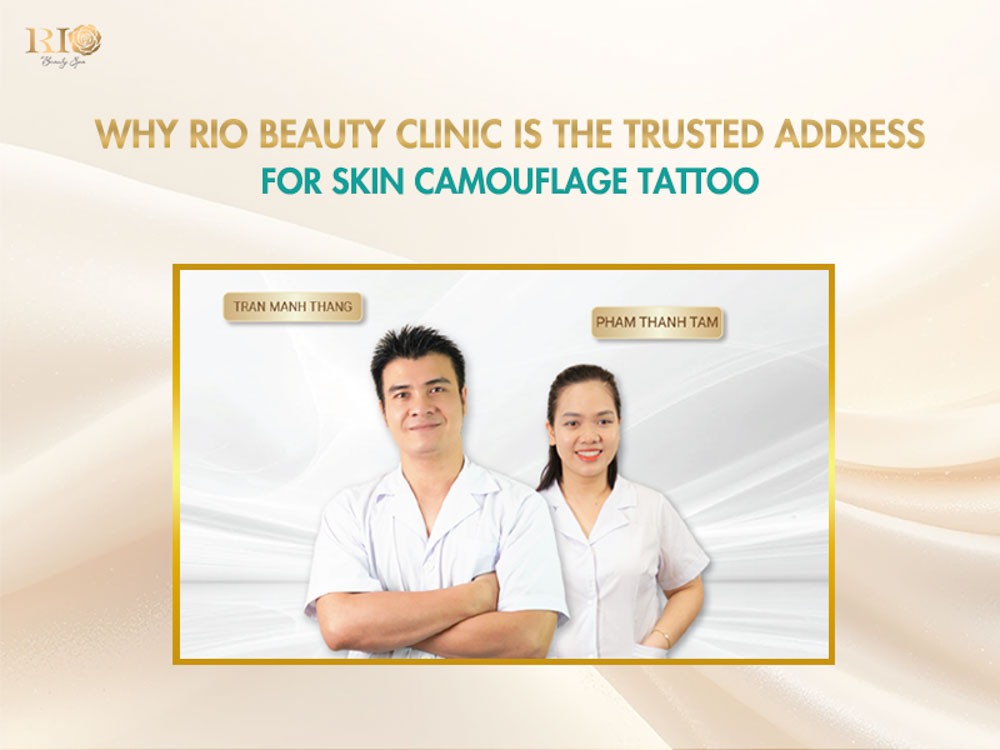
Expert Tran Manh Thang: the pioneer of skin camouflage tattoo in Vietnam
At the core of the clinic’s specialized paramedical procedures is Expert Tran Manh Thang, widely recognized as a leading pioneer who introduced cosmetic skin camouflage techniques to Vietnam.
With over 20 years of hands-on experience in laser technology and aesthetic pigment restoration, he also serves as the Director of Erutech Vietnam, training medical professionals, clinic owners, and technicians nationwide in laser safety and aesthetic applications. His mastery of skin tissue dynamics ensures that even complex, deep-set ink cases receive a carefully calibrated, safe treatment plan.
A team of skilled technicians and masters with proven track records
Exceptional results depend on an experienced, artistically gifted team. Rio Beauty Clinic brings together renowned master practitioners who combine aesthetic sensitivity with scientific rigor:
- Artist Grand Master Pham Thanh Tam (CEO): Bringing more than 16 years of expertise in clinical dermatology and aesthetic PMU, Master Tam Aly (international competition judge and PMU innovator) oversees protocol safety, skin typing, and color harmony to guarantee seamless biological compatibility.
- Master Artist Mely Thao: An internationally celebrated PMU champion (including PMU Winner in Singapore 2025 and Chief Judge at the Asia PMU Beauty Festival 2024), she specializes in hyper-realistic micro-needling techniques, celebrated for her soft touch and natural results.
Advanced technology and equipment for precise skin tone matching
Rio Beauty Clinic operates modern, certified devices that meet strict international benchmarks, including FDA (USA), CE (Europe), and ISO 13485 standards.
By integrating high-end laser systems—including the technology Rio vascular laser system for managing underlying redness and micro-vascular irregularities—the clinic prepares a clean, even tissue foundation before beginning the pigment camouflage process.
Personalized treatment protocols for every skin type and tattoo condition
Rather than applying a generic formula to every client, specialists at Rio create a bespoke treatment plan for each individual. The practitioner examines the client’s skin under cross-polarized light, evaluates ink depth and scar tissue variations, and maps out a step-by-step roadmap.
Whether a client requires a direct skin tone tattoo cover-up or a phased plan combining laser fading with cosmetic camouflage, every step is tailored to their specific skin characteristics and lifestyle factors.
Before and after results: real cases from Rio Beauty Clinic
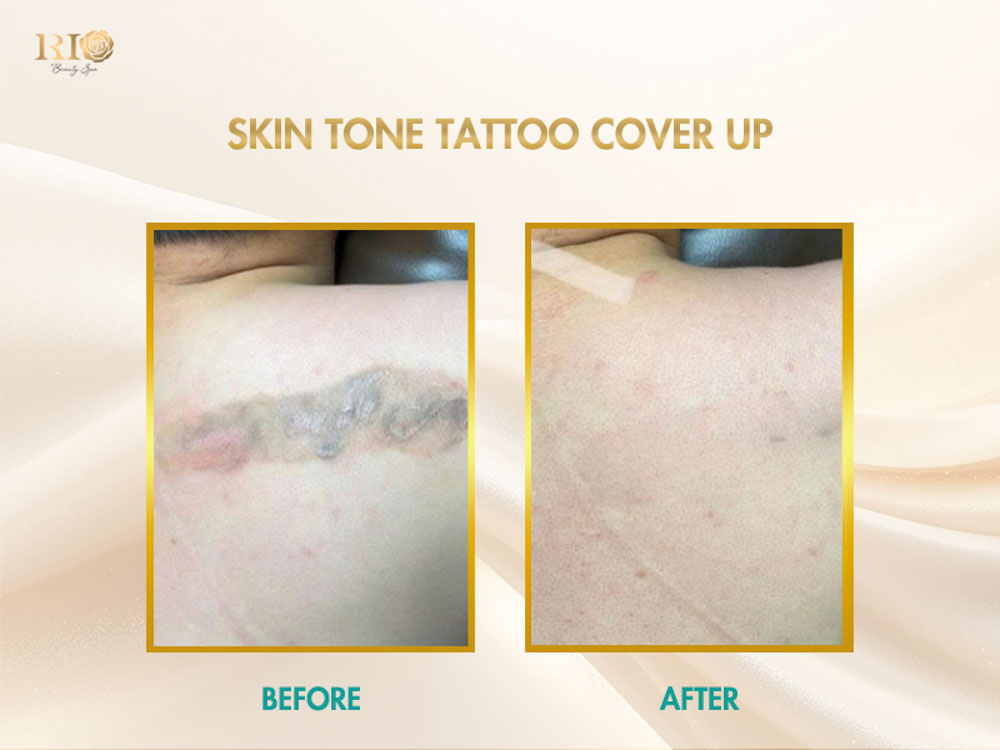
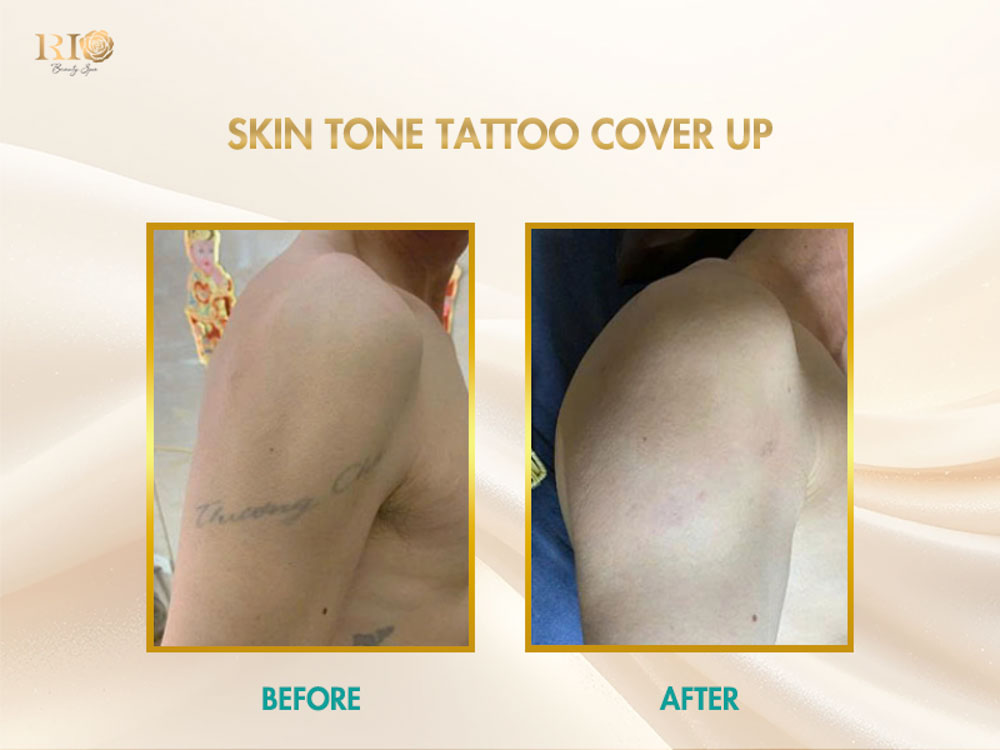
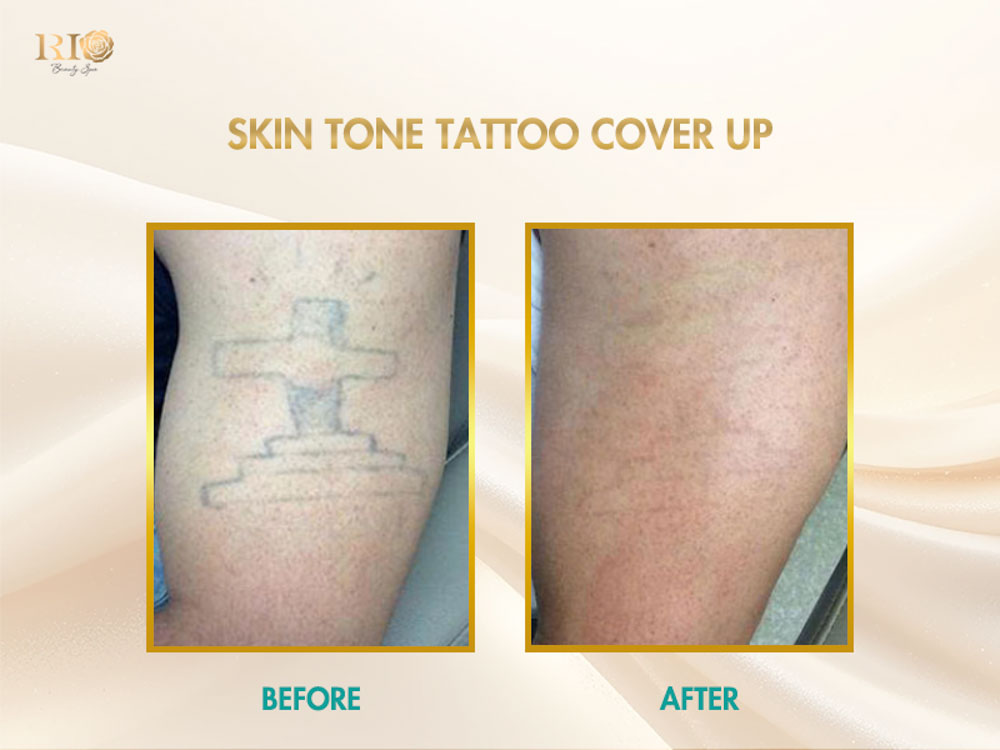
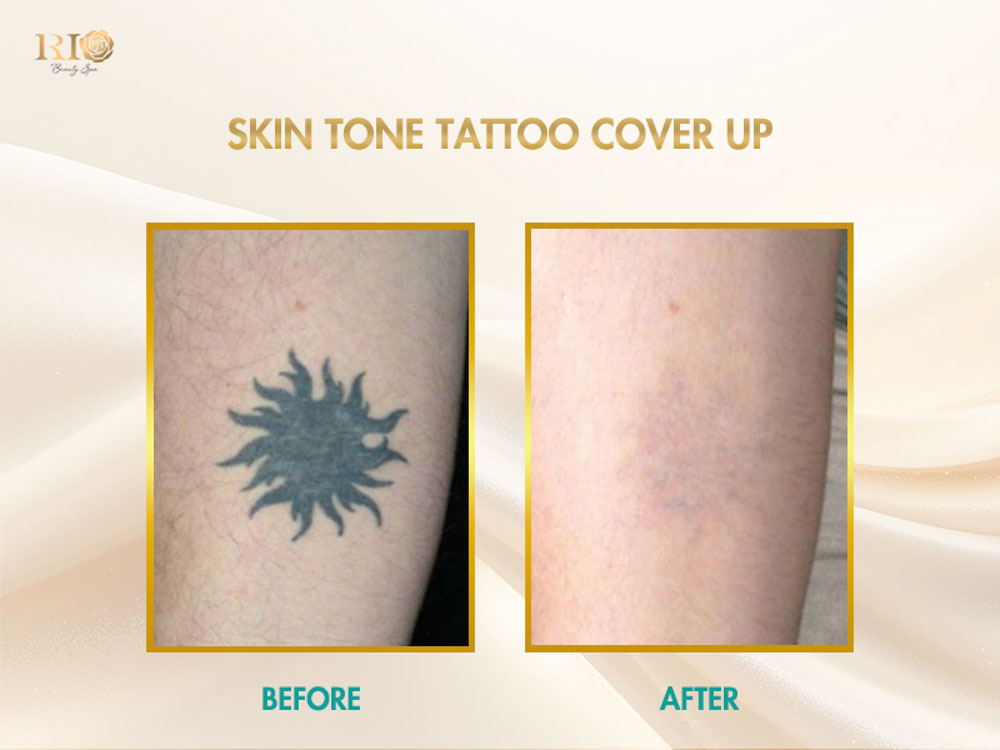
Over twenty years of clinical work, the clinic has handled thousands of complex tattoo correction cases. Real-world before-and-after documentation showcases how targeted camouflage protocols solve diverse concerns:
- Case 1: A client with residual green and blue tattoo ink on the outer wrist that resisted laser treatments was color-corrected and blended, achieving a clean, natural finish matching their fair complexion.
- Case 2: Dark script lettering across a client’s upper shoulder was faded with three targeted laser sessions, followed by two camouflage passes that concealed all remaining undertones.
- Case 3: A scarred tattoo resulting from an uncertified salon removal was treated to soften the scar tissue before being repigmented, creating a smooth, naturally balanced surface.
Aftercare and long-term results: what to expect after skin camouflage tattoo
Understanding the healing process helps you protect your investment and maintain the beauty of your newly balanced skin tone. The skin requires adequate time to encapsulate the newly deposited pigment and rebuild its natural protective barrier.
Healing timeline and what to avoid during recovery
The healing journey following a skin camouflage tattoo cover up unfolds across distinct biological stages:
- Days 1–3 (Initial Epithelialization): The treated area may show mild erythema (redness) and slight swelling. Gently pat the skin dry and apply a thin layer of specialized cream to support the barrier.
- Days 4–7 (Micro-Flaking Phase): A light, delicate micro-crust will form as the epidermis turns over. Avoid scratching, rubbing, or peeling this tissue, as picking disrupts pigment retention.
- Days 8–14 (Sub-Surface Maturation): The initial flaking clears, revealing a slightly light or translucent tone beneath. The organic pigments continue to settle into their final position in the dermis over the next several weeks.
- Weeks 4–6 (Full Color Stabilization): The true healed tone emerges as the skin completes its cellular renewal cycle. At this point, you and your specialist can assess whether a light perfection pass is needed.
To maintain your results, avoid direct sunlight, hot saunas, swimming pools, and active chemical exfoliants (such as AHAs, BHAs, and retinoids) on the treated area for at least four weeks post-procedure.
Understanding skin camouflage tattoo cost and service value
When evaluating your options, reviewing the skin tone tattoo cost helps you weigh the long-term investment against daily cosmetic coverage or repeated, open-ended laser sessions.
Transparent pricing reflects the meticulous craft, certified sterile equipment, and specialized pigment formulations required for a successful skin tone tattoo procedure.
Key factors influencing total treatment investment
The total cost of your treatment plan depends on several case-specific variables:
- Surface area dimensions: Small micro-tattoos require fewer pigment units than sprawling shoulder or back pieces.
- Ink density and contrast: Heavy, dense tattoos may require a combination plan with preparatory laser lightening, which affects the total procedure timeline.
- Number of refinement sessions: Skin with fibrous scar tissue or uneven oil production may need an additional refinement session to lock in complete coverage.
- Practitioner expertise: Choosing an experienced master who uses certified, metal-free pigments prevents costly, stressful corrective procedures in the future.
Clients at Rio Beauty Clinic receive a clear, upfront estimate during their initial consultation, along with an official written warranty and an exclusive 10% loyalty benefit on subsequent maintenance services.
A visible, faded, or poorly executed tattoo should never compromise your confidence or dictate how you present yourself. Choosing a tailored skin tone tattoo cover up offers a safe, predictable path to smooth, even skin without the prolonged downtime of conventional invasive methods.
By pairing advanced pigment chemistry with the artistry of experienced specialists, you can successfully neutralize stubborn, unwanted ink and enjoy clear, naturally balanced skin once again.
With over two decades of aesthetic leadership, Rio Beauty Clinic blends advanced technology, certified organic pigments, and personalized clinical care to deliver subtle, natural results. Contact our specialists today to schedule your private consultation and take the first step toward restoring your skin.
Thẩm Mỹ Rio Beauty Clinic
- Address: 205 Thuy Ke, Tay Ho, Ha Noi
- Email: Telesale.riostudio1@gmail.com or thammyrio999@gmail.com
- Hotline & WhatsApp: +8496.694.1999 or +84963.246.533
- Instagram: https://www.instagram.com/tham.my.rio.beauty.clinic/
- Fanpage: https://www.facebook.com/thammyriobeauty


 “Phạm Thanh Tâm” Đã kiểm duyệt nội dung
Có thể bạn quan tâm:
Best dermal fillers in Hanoi: 2027 clinic guide
Navigating aesthetic treatments in a vibrant foreign city can feel overwhelming,
Dermal filler cost: 2027 price guide and breakdown
Navigating aesthetic treatments requires a clear understanding of financial requirements as
Nose filler: Get a defined profile without surgery
Achieving a balanced and harmonious facial profile no longer requires going
2 Comments
Breast filler safety and complete guide
Choosing a non-surgical approach to enhance body contours has become increasingly
Jawline fillers: Sculpt your jaw with instant results
Achieving a structured lower face without surgery has become one of
Filler dissolving: Complete guide and safety tips 2027
Dermal fillers offer a non-surgical solution to restore volume and refine