


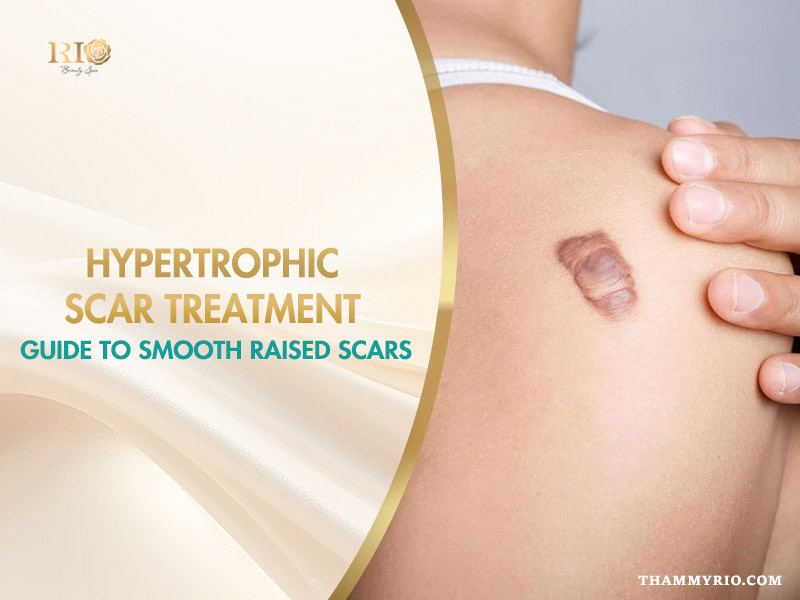
A raised, firm scar can remain long after a cut, burn, surgery, or other skin injury has healed. It may look red or darker than the surrounding skin, feel itchy or tender, and sometimes restrict movement. The right hypertrophic scar treatment depends on the scar’s size, age, location, symptoms, and healing pattern. This guide explains medical procedures, home-care approaches, and signs that indicate a need for professional assessment.
Understanding hypertrophic scars and key differences
Before choosing a raised scar treatment, it is important to confirm what type of scar you have. Hypertrophic scars and keloids can look similar, but they behave differently and may require different treatment plans.
What is a hypertrophic scar and why does it form?
A hypertrophic scar is a raised, firm area of scar tissue that develops when the body produces excess collagen during wound healing. Unlike a typical flat scar, it sits above the surrounding skin. It generally stays within the boundaries of the original wound.
These scars may develop after surgery, burns, cuts, or other injuries. They can appear red, pink, or darker than nearby skin and may feel tight, itchy, or tender. Some gradually soften and flatten, while others remain noticeable for a prolonged period.
Scar formation is part of the body’s natural repair process. However, prolonged inflammation, wound tension, delayed healing, or infection may contribute to abnormal scar development. The appearance of a scar alone does not reveal every factor responsible for its formation.
Hypertrophic scar vs. keloid scar comparison
Hypertrophic scars and keloids are both raised scars, but one key difference is how far they grow.
- Hypertrophic scars usually remain within the original wound’s boundaries. They may become less prominent as the scar matures.
- Keloid scars extend beyond the original injury and may continue growing over time. They can be more likely to recur after treatment.
The distinction matters because procedures suitable for a hypertrophic scar may not have the same role in managing a keloid. For additional information, read this guide to keloid scar treatment.
If the scar is growing beyond the wound, changing rapidly, or difficult to identify, a qualified medical professional can assess it and determine whether further examination is needed.
Common risk factors for thickened scar development
Not everyone develops a thickened scar after an injury. Several factors may influence the healing process:
- Wound location and tension: Areas such as the chest, shoulders, and upper back may experience skin tension that contributes to raised scars.
- Injury severity: Burns, deeper wounds, and some surgical incisions may lead to more noticeable scar tissue.
- Delayed wound healing: Prolonged inflammation or infection can interfere with normal healing.
- Personal scar history: Someone who has previously developed hypertrophic scars or keloids may need extra care when the skin is injured again.
These factors do not determine the outcome in every case. A clinician should consider the wound history, scar characteristics, and current symptoms before recommending treatment.
Medical hypertrophic scar treatment options
Medical hypertrophic scar treatment aims to reduce raised tissue, improve flexibility, ease discomfort, or make the scar less noticeable. Depending on the scar, treatment may involve injections, laser procedures, pressure therapy, cryotherapy, or a combination of approaches. The appropriate choice should follow an assessment of the scar and surrounding skin.
Corticosteroid injections for hypertrophic scar reduction
Corticosteroid injections are commonly used to treat raised scar tissue. The medication is injected into the scar by a trained professional to reduce inflammation and help soften and flatten the affected area.
More than one session may be needed, depending on the scar’s thickness and response. Possible side effects include skin thinning, small visible blood vessels, and changes in skin color around the injection site.
Injections are not suitable for every scar, and the dose and timing must be determined by the treating professional. Ask about expected improvements, possible side effects, and the interval between appointments before starting a course of treatment.
CO₂ fractional laser for improving raised scars
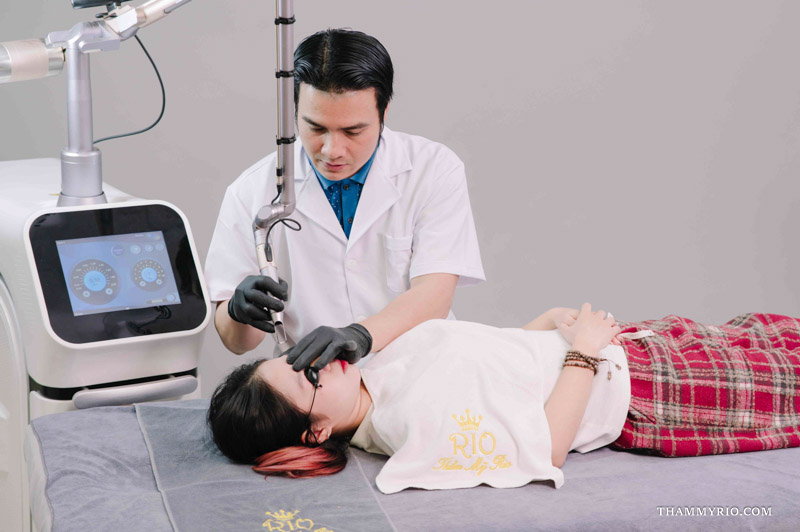
Fractional CO₂ laser creates controlled microscopic columns of treatment within the skin. In selected cases, it may help improve scar texture, flexibility, and other surface characteristics. Its role in hypertrophic scars differs from its use for depressed acne scars, so the treatment parameters and goals need to be tailored to the scar.
Research has examined fractional CO₂ laser both alone and in combination with other treatments, including corticosteroid injections. A systematic review published in 2021 reported encouraging findings but also noted limitations in the available research, including relatively short follow-up in some studies. A 2026 meta-analysis also reported potential benefits from combining fractional CO₂ laser with triamcinolone, while calling for further high-quality research.
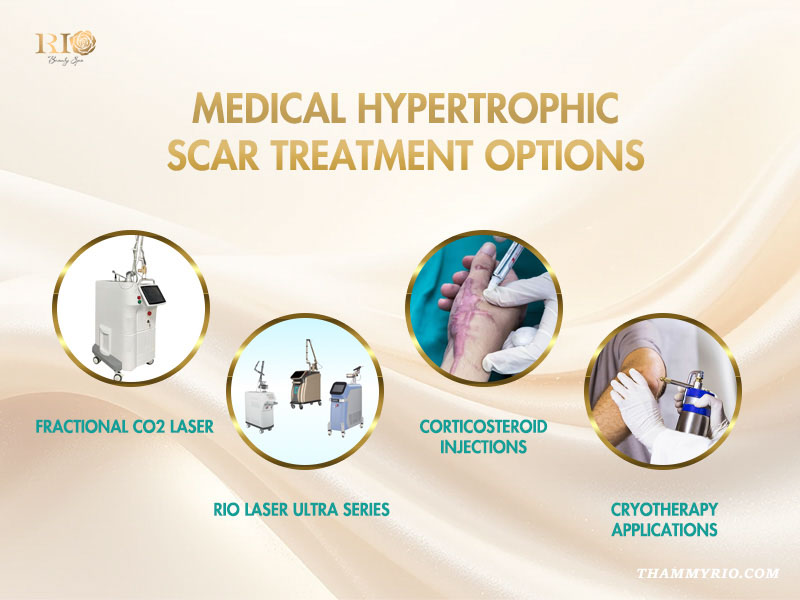
Laser treatment can cause temporary redness, swelling, irritation, or changes in pigmentation. It may not be appropriate for every scar or skin type. A professional assessment should establish whether laser treatment is suitable and whether it should be combined with another method.
You can learn more about technology Fotona 5D laser CO2 fractional before discussing a treatment plan with a qualified provider.
Surgical scar revision
Surgical scar revision involves removing or modifying existing scar tissue to improve its appearance or function. It may be considered for selected scars that remain troublesome despite other treatments, particularly when the scar causes tightness or restricts movement.
However, surgery creates a new wound, which means another scar will form during healing. In people prone to abnormal scarring, the new scar may become raised again. Surgery is therefore not automatically the preferred approach for every hypertrophic scar.
A clinician should assess the scar’s maturity, location, skin tension, and previous treatment history. The discussion should include the expected change, recovery period, and options for reducing the risk of another raised scar.
To explore more useful insights and advanced solutions for managing hypertrophic scars, check out the specialized scar treatment services at Rio Beauty Clinic.
Pressure therapy and cryotherapy applications
Pressure therapy uses a suitable compression dressing or garment to apply sustained pressure to a healing area. It is used particularly in some burn-scar care plans and may help limit excessive scar development. The correct pressure and duration depend on the body site and the treatment plan; pressure garments should not be improvised without guidance.
Cryotherapy uses controlled freezing, commonly with liquid nitrogen, to treat selected raised scars. It may help reduce scar thickness, but several sessions can be required. Possible side effects include blistering, discomfort, and light or dark patches in the treated area.
Both approaches require careful case selection. Cryotherapy and pressure therapy are not interchangeable, and neither should be assumed suitable for every raised scar. A clinician can explain the expected benefits, risks, and role of each approach.
Non-invasive raised scar treatment methods at home
Home care can support a professional raised scar treatment plan, especially once the wound has closed. It is not a substitute for medical assessment when a scar is growing, painful, or affecting movement. The aim is to protect the skin, reduce unnecessary irritation, and follow a consistent care routine.
Silicone gel sheets and creams for hypertrophic scar reduction
Silicone gel and silicone sheets are widely used in raised-scar care. When used consistently on suitable, fully healed skin, they may help improve scar thickness, firmness, redness, or itching over time.
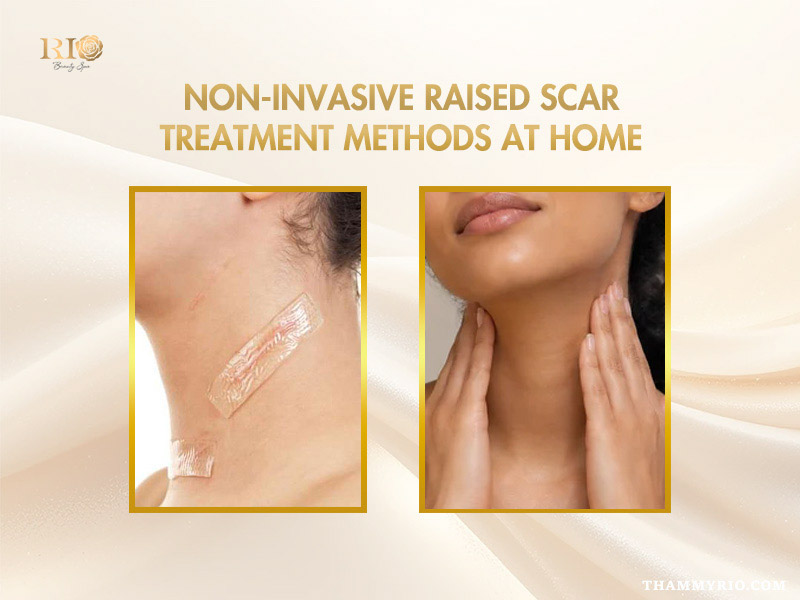
Follow the product instructions and the advice of your healthcare professional. Do not place silicone products over an open, infected, or unhealed wound unless specifically directed by a clinician. Stop using a product and seek advice if significant irritation develops.
Results are gradual and vary between individuals. Silicone care may be one part of a broader plan rather than a stand-alone solution for every thickened scar.
Massage techniques and topical ointments
Gentle scar massage may be considered after the wound has fully healed and a clinician confirms that massage is appropriate. It may help some scars feel more flexible, but vigorous rubbing can irritate sensitive tissue. Avoid massaging an open wound, recently treated area, or scar that becomes more painful with pressure.
A simple moisturizer may help reduce dryness and friction. Other topical products should be chosen according to the scar’s condition and the available evidence. Do not apply prescription steroid creams, strong acids, or unverified scar remedies without professional guidance.
If a scar is worsening or has not been assessed, seek advice before adding new products or massage techniques to your routine.
Protecting the skin and avoiding further injury
Protecting the healing area from friction and repeated injury is an important part of scar care. Keep the skin clean, follow wound-care instructions, and avoid picking at scabs or irritating the area with harsh products.
Once the skin has healed, use appropriate sun protection on exposed scars. Sun exposure may make discoloration more noticeable, and some procedures can temporarily increase sensitivity to sunlight.
If the scar is linked to an ongoing skin condition or repeated irritation, addressing that cause is also important. Consistent care cannot guarantee that a scar will flatten, but it can help protect the skin during recovery.
Essential notes for safe hypertrophic scar treatment
Safe hypertrophic scar treatment starts with an accurate assessment and a clear understanding of the benefits and limitations of each option. Avoid choosing a procedure based solely on online photographs, promotional claims, or the promise of rapid results.
How to prevent complications during healing
After a procedure, follow the care instructions provided by the treating professional. Depending on the treatment, this may include keeping the area clean, protecting the skin from friction, and avoiding products that may irritate the healing tissue.
Do not remove dressings, apply unprescribed medication, or combine treatments without checking whether doing so is appropriate. Attend recommended follow-up visits so the clinician can review the scar’s response and make adjustments if needed.
Seek prompt medical advice if the area becomes increasingly painful, warm, swollen, or begins to drain pus. Fever, spreading redness, or a wound that opens also warrants medical assessment.
When to consult a dermatologist for raised scar treatment
Consider an appointment with a qualified medical professional if a scar continues to thicken, causes persistent itching or pain, restricts movement, or changes in a way that concerns you. Assessment is also useful when you cannot distinguish a hypertrophic scar from a keloid or another skin growth.
During the consultation, discuss when the scar formed, what caused the injury, previous treatments, current medications, and any history of unusual scarring. Ask about the treatment goal, alternatives, potential side effects, expected recovery, and the possibility of recurrence.
For more information about the people and procedures involved in scar care, review the professional profile of Dr. Hung Nguyen and the scar treatment process.
Understanding follow-up care and long-term expectations
Scar improvement after hypertrophic scar treatment often takes time. Some scars become softer and flatter as they mature, while others need ongoing care or more than one type of treatment. Progress depends on the scar itself, the chosen approach, and the body’s healing response.
Keep a record of changes using photographs taken under similar lighting and from similar angles. This can help you and your clinician evaluate changes in height, color, and texture across appointments.
Do not stop a prescribed plan early or add another procedure simply because visible changes are gradual. Discuss progress and concerns at follow-up visits so adjustments can be made safely.
Choosing a suitable hypertrophic scar treatment plan
A raised scar can affect comfort, movement, and confidence, but treatment options are available. Corticosteroid injections, selected laser procedures, silicone products, pressure therapy, cryotherapy, and surgical revision each have a different role. The right approach depends on whether the scar is hypertrophic or keloid, its location and maturity, and the individual’s skin and medical history.
The goal of hypertrophic scar reduction is to improve scar thickness, flexibility, symptoms, or appearance while managing risks and setting realistic expectations. No single method guarantees the same outcome for everyone.
If you are considering professional care, begin with an assessment and a clear discussion of your options. Explore the scar treatment guide, review scar treatment results, and read the scar treatment cost guide to prepare your questions.
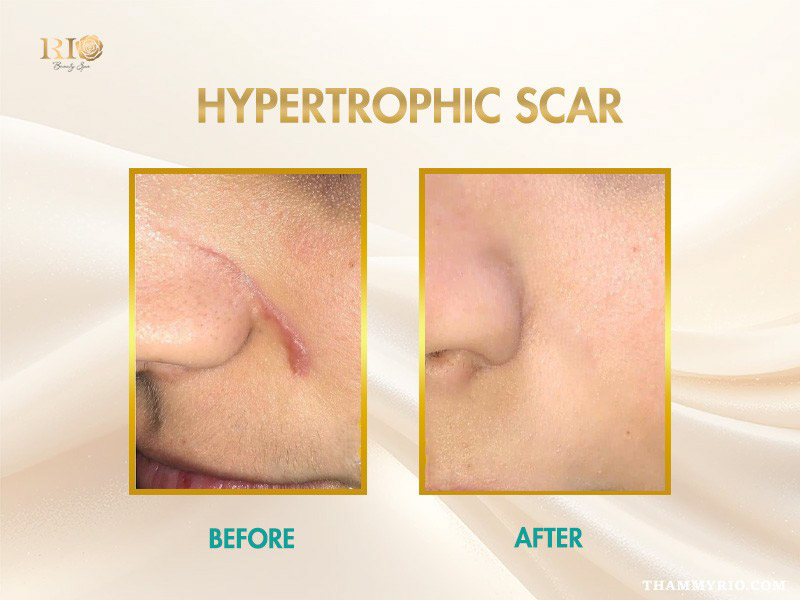
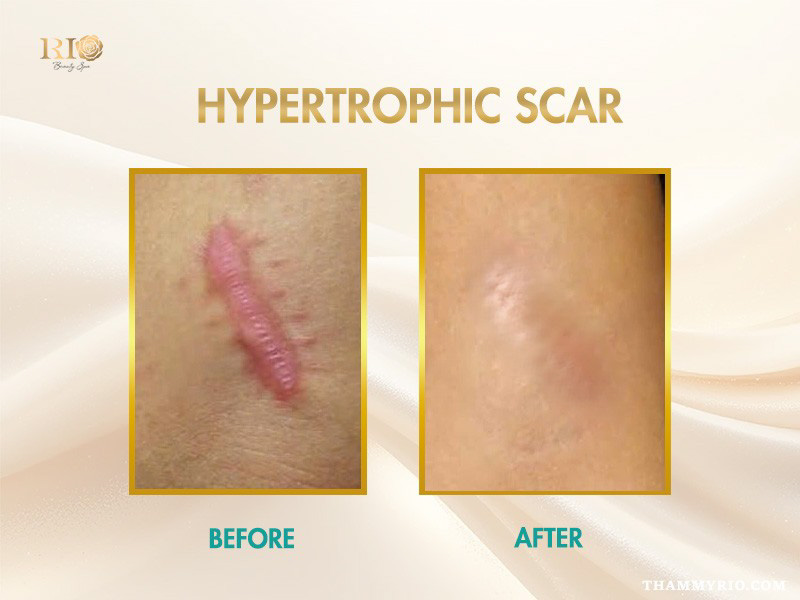
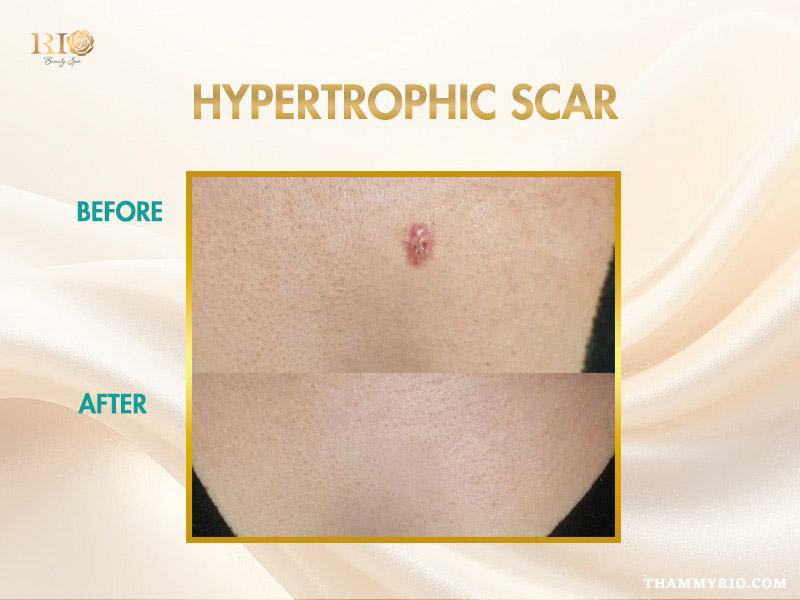
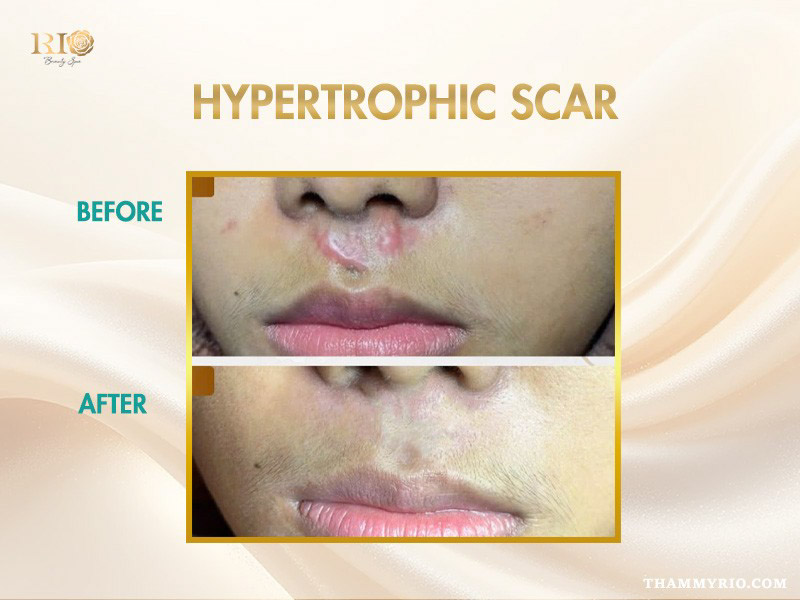
For further information about scar-care services, contact Rio Beauty Clinic through the channels below:
- Email: Telesale.riostudio1@gmail.com or thammyrio999@gmail.com
- WhatsApp: +84 966 941 999 or +84 963 246 533
- Instagram: Rio Beauty Clinic on Instagram
- Facebook: Rio Beauty Clinic on Facebook
- Website: Rio Beauty Clinic
Hypertrophic scar treatment should be selected after an appropriate assessment. Contact the clinic to discuss your concerns, available options, possible risks, and the care plan that may suit your situation.


Có thể bạn quan tâm:
Fractional CO2 laser acne scar treatment secrets revealed
Persistent facial blemishes often leave stubborn textural damage that standard skincare
Real scar treatment results at Rio Beauty Clinic
Evaluating aesthetic interventions requires looking beyond marketing claims to examine tangible
Laser for keloid scars: Shocking truth before you buy
Dealing with raised, thick skin marks can be frustrating, especially when
Accident scar treatment options for clear skin
Dealing with visible skin marks from unexpected mishaps can affect daily
Keloid scar treatment guide to flatten raised scars
A raised scar that continues to grow beyond the original wound
Eyeliner tattoo removal before and after in real time
Observing an eyeliner tattoo removal before and after progression reveals a