


Darkening around the anal and perianal area can develop gradually, and it does not necessarily mean that anything is wrong with the skin. Friction, hormonal changes, genetics, hair-removal habits, and repeated irritation can all influence how much melanin the area produces.
For people who are uncomfortable with a visibly darker or uneven tone, laser anal whitening has become one of the professional approaches worth considering. Rather than treating intimate pigmentation as a one-size-fits-all concern, a well-planned laser anal whitening protocol considers the depth of pigmentation, surrounding skin tone, skin sensitivity, and the desired aesthetic outcome.
It is also important to understand that laser anal whitening is not simply about making intimate skin “white.” The goal is usually to soften excessive pigmentation and create a more balanced appearance while respecting the natural characteristics of the skin.
Understanding anal darkening: causes and concerns
Before choosing an anal whitening laser, it helps to understand why the perianal area may appear darker in the first place. The color of intimate skin varies naturally from person to person, and the degree of pigmentation can also change over time.
This distinction matters because professional laser anal whitening should begin with an assessment of the pigmentation rather than an assumption that every darker area requires the same procedure.
What causes anal darkening?
Several factors may contribute to darker pigmentation around the anal area:
- Friction: Repeated contact from underwear, tight clothing, walking, exercise, or prolonged sitting may irritate sensitive skin. Persistent friction can encourage post-inflammatory pigmentation.
- Hormonal changes: Pregnancy, postpartum changes, aging, and other hormonal fluctuations may influence melanocyte activity and alter pigmentation in intimate areas.
- Hair removal: Repeated shaving, waxing, or chemical hair-removal products may trigger irritation. For some people, recurring irritation can leave the skin looking darker over time.
- Genetics: Natural melanin distribution differs considerably between individuals. Some people simply have deeper pigmentation in intimate areas as part of their baseline skin tone.
- Skin aging: Changes in cellular turnover and cumulative environmental or mechanical stress can gradually affect the appearance and texture of sensitive skin.
- Previous irritation: Aggressive exfoliation or unsuitable skincare products may compromise the skin surface and contribute to uneven tone.
Understanding these factors also explains why laser anal whitening should not be viewed as a permanent solution to every cause of pigmentation. If ongoing friction or irritation remains unchanged, the skin may continue to produce excess pigment.
Is laser anal whitening safe?
The safety of laser anal whitening depends heavily on the equipment, treatment parameters, operator expertise, skin condition, and the area being treated. The procedure should be approached as a specialized aesthetic service for external perianal skin rather than something that should be performed on internal mucosal tissue.
A professional anal bleaching laser protocol should therefore begin with an assessment of the skin and pigmentation. Energy settings need to be selected carefully because intimate skin can be more sensitive than many other body areas.
It is equally important to distinguish professional laser pigmentation work from household “bleaching” products or aggressive chemical treatments. Laser anal bleaching uses controlled light energy rather than household whitening chemicals.
At Rio Beauty Clinic, the approach focuses on selecting technology and parameters according to the client’s pigmentation and skin characteristics rather than applying identical settings to everyone.
How does laser anal whitening work?
The principle behind laser anal whitening is based on directing controlled light energy toward pigment-containing areas. Depending on the technology and parameters selected, laser energy can interact with melanin and help break down concentrated pigment.
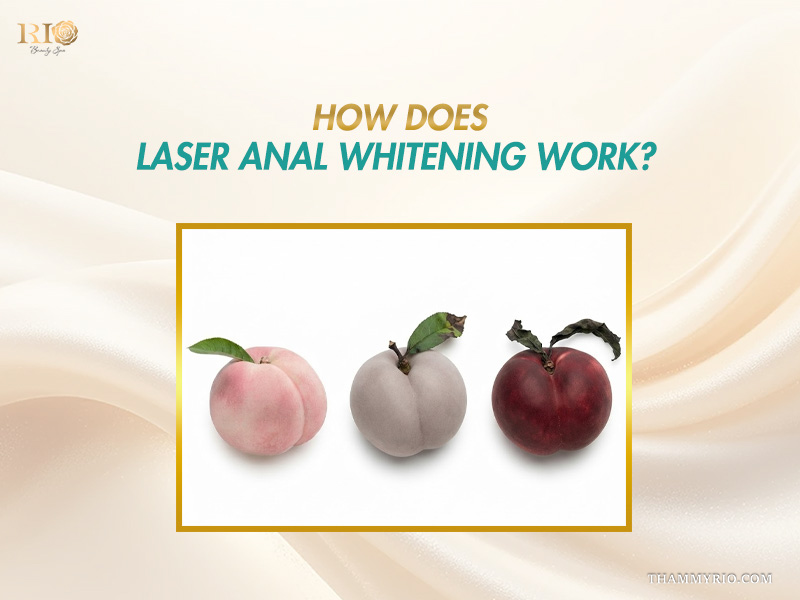
The treatment is therefore different from simply covering dark skin with another color. It aims to work on the existing pigmentation, while the skin gradually goes through its natural recovery process.
The science behind laser pigment removal
Melanin is the pigment responsible for much of the visible color variation in human skin. When excess melanin becomes concentrated in a particular area, the skin may appear noticeably darker than its surroundings.
An anal whitening laser uses a selected wavelength and pulse profile to target pigment. With pigment-focused systems such as picosecond technology, short pulses can deliver energy to pigment-containing particles, helping fragment them into smaller particles that the body can gradually process.
The exact biological response depends on the pigmentation, skin characteristics, laser parameters, and individual recovery.
This is why the phrase laser anal whitening should not be interpreted as an instant “erase button” for pigmentation. The visible change develops progressively, and professional parameter selection is essential when working with sensitive skin.
Fractional CO2 technology works differently. Instead of focusing exclusively on pigment particles, fractional laser creates controlled micro-treatment points in the skin. This approach can be incorporated when surface renewal and skin texture are also part of the aesthetic objective.
Types of lasers used for anal whitening
Different laser technologies have different operating principles, so “laser whitening” should not be treated as one universal technique.
Common technologies discussed in pigmentation-focused aesthetic care include:
- Q-Switch Nd:YAG: Uses short laser pulses and is commonly associated with pigment-focused applications.
- Picosecond laser: Uses extremely short pulses, allowing concentrated energy delivery to pigment with a different interaction profile from traditional nanosecond systems.
- CO2 Fractional: Creates controlled micro-zones in the skin and is generally considered when surface renewal and texture improvement are part of the treatment objective.
At Rio, the supplied technical materials describe Picotech Advance and CO2 Fractional Fotona 5D as technologies used within the clinic’s approach to pigmentation and skin rejuvenation.
The most appropriate anal laser whitening technology depends on the pigmentation pattern, skin condition, and intended outcome. A professional protocol may therefore prioritize one technology rather than automatically combining several.
How many sessions may be needed depending on individual pigmentation?
There is no universal number of sessions for laser anal whitening. The amount of pigmentation, skin response, selected laser technology, treatment settings, and spacing between sessions can all influence the recommended plan.
A course of several sessions may be considered when pigmentation is more pronounced, with sufficient recovery time between appointments. The commonly discussed range of three to five sessions should be treated as an indicative planning range rather than a guaranteed requirement for every client.
A better approach is to reassess the skin after each session and adjust the next step according to its response.

Who may consider laser anal whitening?
Not everyone seeking a lighter intimate skin tone necessarily needs laser. Some people may prefer gradual skincare, while others may have pigmentation that requires a more technology-focused approach.
The key question is not simply whether laser anal whitening is available, but whether laser is an appropriate match for the pigmentation and aesthetic goal.
People concerned about visibly darker anal pigmentation
People may consider laser anal whitening when the perianal skin appears noticeably darker or less even than the surrounding area.
This may include pigmentation associated with long-term friction, repeated irritation, hormonal changes, or naturally deeper skin tone.
However, darker skin should not automatically be considered a problem that needs correction. The decision is entirely aesthetic and personal. A professional assessment can help distinguish between pigmentation that may respond to laser and situations where another approach may be more appropriate.
People looking for a professional rather than home-use approach
Some people prefer a professional setting because they want their pigmentation assessed before selecting a method. This is particularly relevant when the skin is highly sensitive, the pigmentation is pronounced, or previous home products have produced limited improvement.
Professional anal bleaching can involve technology selection, parameter adjustment, progress monitoring, and individualized aftercare.
For those who prefer an independent home-care route, Rio also offers Rio Pink Secret as a separate at-home intimate skincare solution rather than as a required component of a laser protocol. Its supplied formulation includes Alpha Arbutin, Niacinamide, stabilized Vitamin C, Peptides, Hyaluronic Acid and Vitamin B5.
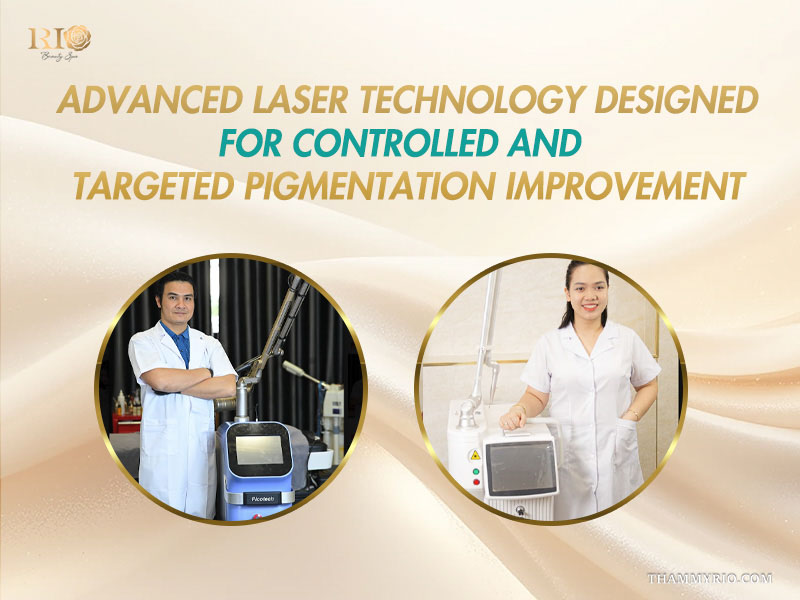
Professional laser anal whitening at Thẩm Mỹ Rio Beauty Clinic
At Thẩm Mỹ Rio Beauty Clinic, intimate pigmentation is approached as a color and skin-quality concern that can require different techniques depending on the starting point.
The clinic’s supplied materials describe a combination of advanced laser technology and cosmetic pigmentation techniques for intimate skin, including the use of Picotech Advance, CO2 Fractional Fotona 5D and Rio Light Pink Skin.
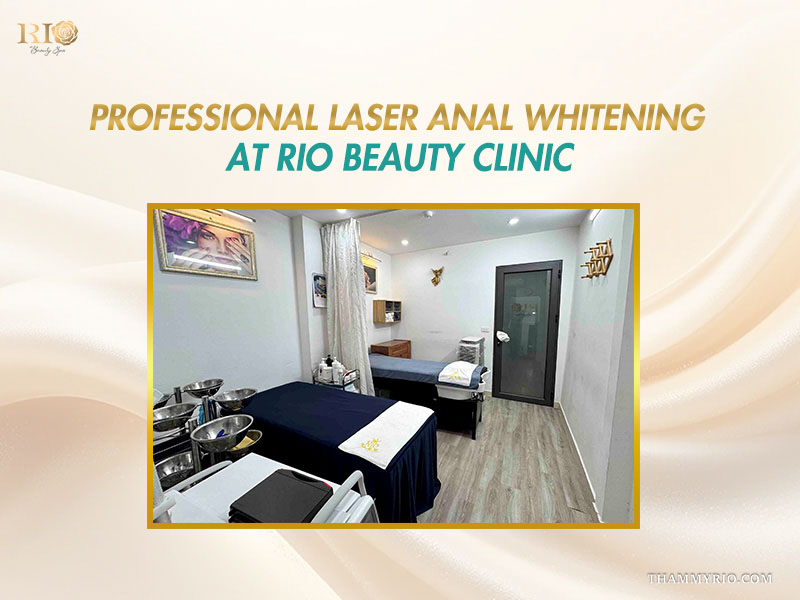
Advanced laser technology designed for controlled and targeted pigmentation improvement
For pigmentation-focused protocols, Rio uses Picotech Advance and CO2 Fractional Fotona 5D within its broader aesthetic technology system.
Picotech Advance is positioned around short-pulse pigment-focused laser technology, while Fotona 5D’s fractional CO2 technology can be incorporated when skin renewal is also relevant.
The supplied Rio materials specifically describe the combination of Picotech Advance and Fotona 5D for pigmentation and skin rejuvenation.
Rather than presenting one machine as suitable for every pigmentation pattern, the more practical approach is to determine which technology, parameters, and treatment sequence fit the individual skin.
This distinction is particularly important for laser bleaching anus services, where the skin requires controlled treatment and careful parameter selection.
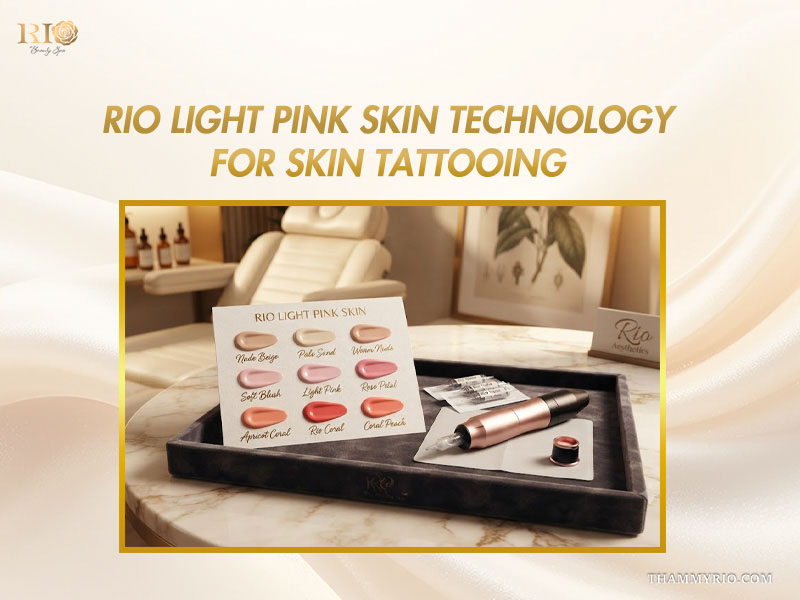
Rio Light Pink Skin technology for skin tattooing
Not every pigmentation concern is best approached by laser alone. When the objective includes visual color correction, Rio Light Pink Skin offers a different technique.
According to Rio’s supplied materials, the method uses a nano-needle technique to introduce organic pigment into the epidermis. The color can be customized using tones such as nude, light pink, and soft coral to create a more harmonious appearance.
The technique is based on color theory rather than simply applying one opaque shade. The surrounding skin tone, existing pigmentation, and desired visual effect are considered when developing the color formulation.
This makes Rio Light Pink Skin particularly relevant when the aesthetic objective involves color correction, rather than pigment reduction alone.
The combination approach: laser + skin tattooing
For some cases of pronounced pigmentation, a combination approach may be considered.
The logic is straightforward: laser technology can be used to work on the existing excess pigment, while skin-tone pigmentation can subsequently address remaining visual unevenness when appropriate.
Rio’s supplied material describes this two-stage concept: Picotech Advance or CO2 Fractional Fotona 5D may be incorporated before pigmentation, followed by Rio Light Pink Skin when color correction is appropriate.
However, this does not mean every client needs both techniques. Combining laser anal whitening with cosmetic pigmentation should depend on the skin’s starting condition and the desired result.
The objective is not to layer treatments unnecessarily, but to choose the most logical sequence for the specific pigmentation pattern.
A highly experienced team with extensive hands-on expertise
Technology is only one part of a professional anal laser whitening service. The person operating the equipment or performing pigmentation also plays an important role in parameter control, color selection, technique, and aftercare guidance.
Rio’s supplied materials identify Master Trần Mạnh Thắng as a laser specialist with more than 20 years of experience and Grand Master Phạm Thanh Tâm as an experienced PMU specialist.
You can learn more about laser specialist Tran Manh Thang and Grand Master Pham Thanh Tam when evaluating the team’s professional background.
For intimate pigmentation, experience matters because different areas can vary in thickness, sensitivity, melanin concentration, and color response.

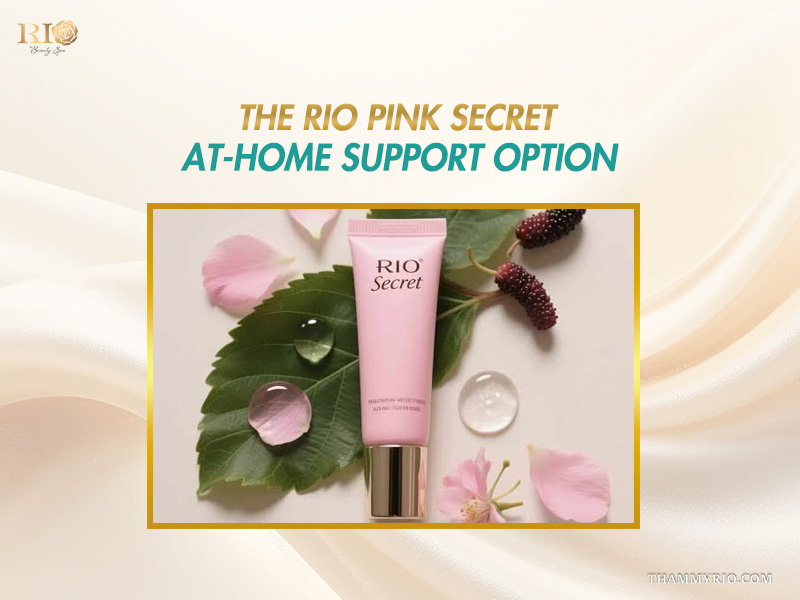
The Rio pink secret: at-home support option
Rio Pink Secret is designed as an independent at-home intimate skincare solution for people who prefer to care for their skin at home.
The supplied product material lists Alpha Arbutin, Niacinamide, stabilized Vitamin C, Peptides, Hyaluronic Acid and Vitamin B5, alongside botanical extracts.
Its positioning is different from anal laser whitening. Instead of using laser energy, Rio Pink Secret is a daily topical skincare option intended to help address uneven tone and support intimate skin care.
This makes it relevant for people who do not want or cannot conveniently visit an aesthetic facility. You can explore Rio Pink Secret separately or learn more about approaches to naturally lighten the pubic area.
For broader intimate pigmentation concerns, Rio also provides information about bikini area whitening, allowing customers to consider the treatment area as part of their overall aesthetic goal.
Laser anal whitening can be a useful professional option for people who want to address visibly darker or uneven perianal pigmentation. However, the most appropriate approach depends on the depth and pattern of pigmentation, skin sensitivity, previous irritation, surrounding skin tone, and the desired aesthetic outcome.
Laser technology and cosmetic pigmentation solve different parts of the color problem. Pigment-focused laser systems such as Picotech Advance can be considered when the objective is to work on excess pigmentation, while fractional CO2 technology may have a role when skin renewal is also relevant. Rio Light Pink Skin takes another approach by using customized organic pigmentation to create a more harmonious tone. Rio’s supplied materials describe these techniques as part of its broader approach to intimate pigmentation and skin rejuvenation.
At Thẩm Mỹ Rio Beauty Clinic, the emphasis is on choosing technology and technique according to the individual skin rather than assuming that one anal whitening laser protocol will work for everyone.
If you are considering laser anal whitening, professional assessment is a sensible starting point. It allows the pigmentation, skin condition, treatment area, and aesthetic expectations to be discussed before deciding whether laser, cosmetic pigmentation, home skincare, or a staged combination is the better direction.
For more information about Rio Beauty Clinic and its intimate aesthetic services, visit the Rio Beauty Clinic website.
Rio Beauty Clinic
- Address: 205 Thuy Ke, Tay Ho, Ha Noi
- Email: Telesale.riostudio1@gmail.com or thammyrio999@gmail.com
- Hotline & WhatsApp: +8496.694.1999 or +84963.246.533
- Instagram: https://www.instagram.com/tham.my.rio.beauty.clinic/
- Fanpage: https://www.facebook.com/thammyriobeauty


 “Phạm Thanh Tâm” Đã kiểm duyệt nội dung
Có thể bạn quan tâm:
Fotona 5D fractional CO2 laser treatment for skin and intimate care in Vietnam
To address complex aesthetic concerns ranging from stubborn chloasma to deep
Laser anal whitening: safe, effective & long-lasting results
Darkening around the anal and perianal area can develop gradually, and
Laser anal whitening: safe, effective & long-lasting results
Dark pigmentation in the perianal area is a common physiological response
Rio Pink Secret: At-home intimate brightening solution
Hyperpigmentation in intimate areas is a natural physiological response that many
Scar camouflage tattoo
Wearing tiger stripes sounds cool until those marks appear uninvited on
Whiten nipple: Effective tips and treatments
Many individuals seek to whiten nipple and areola areas to restore