


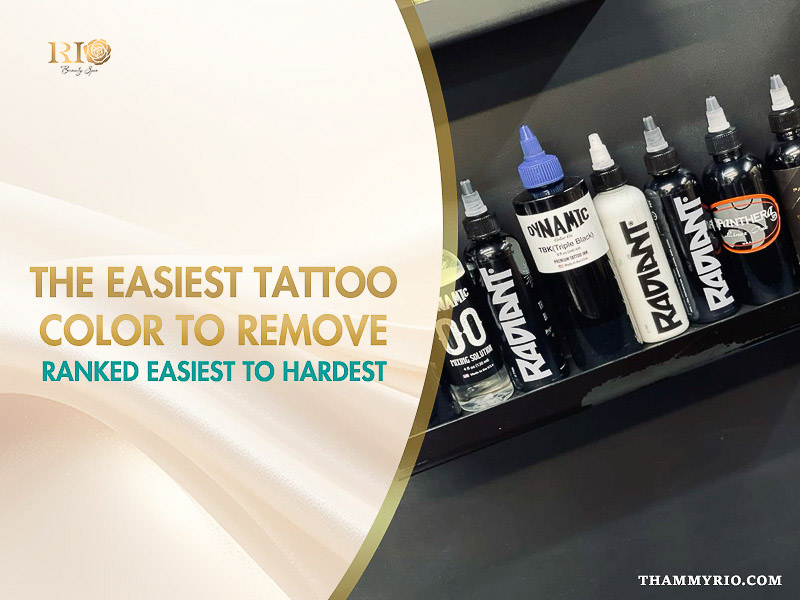
Deciding to part ways with ink often brings a mix of anxiety and hope regarding the final results. Understanding the easiest tattoo color to remove empowers you to set realistic expectations for your skin transformation journey. Scientific advancements in laser technology mean that your past choices do not define your future appearance forever. This guide provides a detailed breakdown of how different pigments react to light energy, helping you navigate the path toward clear skin with confidence and expert insight.
Easiest tattoo color to remove ranked from easiest to hardest
The biological interaction between laser wavelengths and ink particles varies significantly depending on the chemical composition of the pigment. You should recognize that dark pigments absorb the full spectrum of light energy, which facilitates a more efficient fragmentation process.
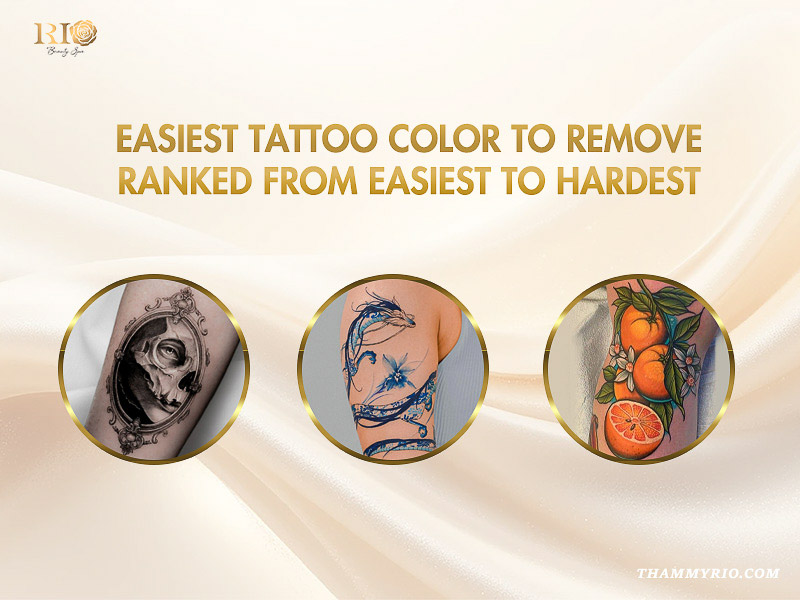
The following data categorizes common pigments based on their responsiveness to standard laser protocols. This ranking reflects clinical observations and established scientific scales like the Kirby-Desai system.
| Ease of Removal | Tattoo Colors | Primary Reason |
| Category 1: High | Black, Dark Blue | These colors absorb all laser wavelengths efficiently. |
| Category 2: Moderate | Red, Dark Brown, Dark Purple | Respond well to specific 532nm wavelengths. |
| Category 3: Challenging | Orange, Yellow | Lower absorption rates require specialized frequencies. |
| Category 4: High Difficulty | Neon Green, Sky Blue, White | These pigments often reflect light or contain metallic oxides. |
When you examine color tattoo removal results, black ink remains the gold standard for predictable outcomes. Its carbon-based structure breaks down into tiny particles that your lymphatic system clears with relative efficiency.
Why the easiest tattoo ink to remove is not only about color
While pigment shade plays a primary role, your physiological factors and the ink’s depth contribute to the overall success rate. The easiest tattoo ink to remove often sits in the upper dermis where laser energy reaches it without excessive scatter.
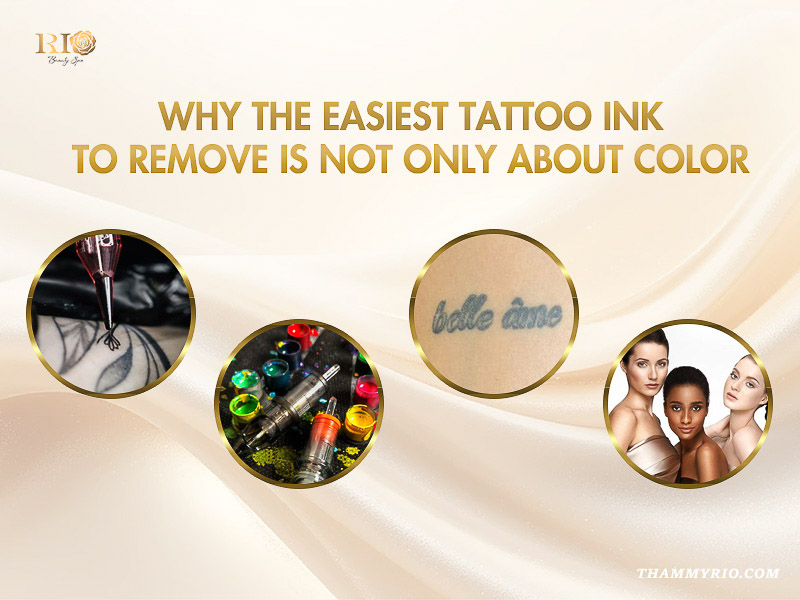
Your immune system acts as the silent partner in this process, carrying away the shattered ink debris over several weeks. Factors such as blood circulation and the absence of scarring from the initial tattooing process influence how quickly you see visible fading.
Understanding the complexity of skin layers clarifies why a professional assessment is vital before starting your procedure to remove tattoo sessions. Individual health habits, including hydration and sun protection, directly impact how your body processes the fragmented pigments.
How laser tattoo removal handles different colors
Modern technology utilizes specific wavelengths to target individual pigment groups without damaging the surrounding skin tissue. Our facility employs the Rio Laser Ultra Series, which provides versatile power to address multi-colored designs effectively.
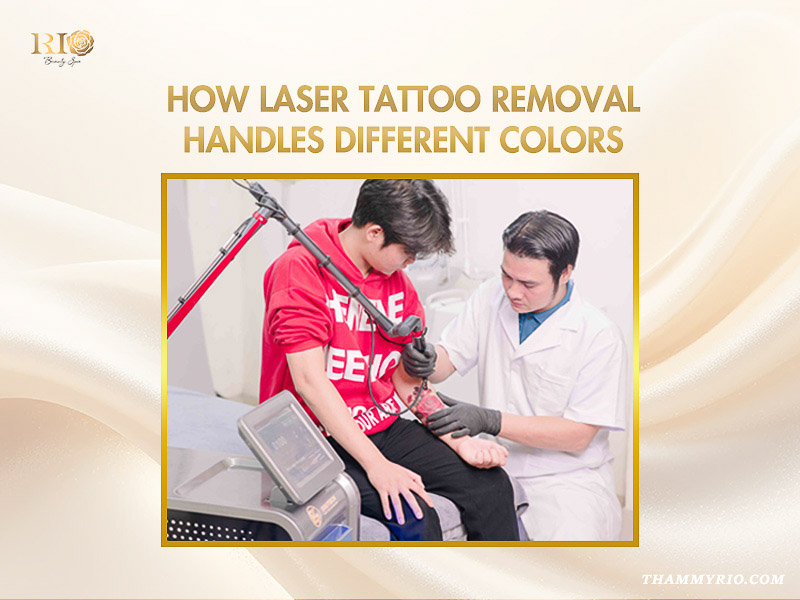
For dark pigments, the Spectra ND Yag Laser utilizes a 1064nm wavelength to reach deep-seated ink. Meanwhile, the PicoTech Advance Laser delivers ultra-short pulses that create a mechanical effect, shattering even stubborn colors into dust-like particles.
Expertise in calibrating these machines remains the defining factor in achieving a clear complexion. Artist Grand Master Pham Thanh Tam and Expert Tran Manh Thang bring decades of experience to every session, ensuring high precision. Their deep understanding of skin anatomy and pigment chemistry allows for a customized approach that respects your skin’s integrity.
FAQs – Easiest tattoo color to remove
Determining the easiest tattoo color to remove involves evaluating the physical location of the ink and the lifestyle of the individual.
Which body parts have the easiest tattoos to remove?
Tattoos located closer to the heart typically fade faster due to superior blood flow and lymphatic drainage. You might find that a chest tattoo removal process moves more quickly than work done on the extremities.
Areas like the ankles or fingers have slower circulation, which extends the time needed for the body to flush out the ink. Therefore, the hand tattoo removal journey often requires more patience compared to torso placements.
Does the age of the ink determine the easiest tattoo color to remove?
Older tattoos generally respond more favorably to laser energy because the body has already begun the natural fading process. Over time, your immune system slowly breaks down ink particles, making the easiest tattoo ink to remove those that have been present for over a decade.
Fresh ink contains a higher density of pigment, which requires more energy to fragment initially. Waiting at least six months after getting a tattoo allows the skin to heal and the ink to settle before starting laser tattoo removal.
Is professional or amateur ink considered the easiest tattoo ink to remove?
Amateur tattoos, often created with India ink or charcoal, usually sit more shallowly in the skin and contain less pigment density. These characteristics often make them the easiest tattoos to remove compared to complex professional pieces.
Professional artists use high-quality, concentrated inks and place them deeply and evenly within the dermis. While this creates a beautiful tattoo, it also necessitates more sessions to clear during a tattoo removal session.
Are shaded designs or solid lines the easiest tattoos to remove?
Shading and “wash” effects use less ink per square inch, which allows the laser to clear the area with fewer passes. You will likely notice that shaded backgrounds are the easiest tattoos to remove during the early stages of your journey.
Solid, bold lines or a heavy black tattoo removal project involve saturated pigment that absorbs significant energy. These areas stay visible longer and require a strategic approach to avoid overheating the skin.
How many sessions does it typically take for the easiest tattoo color to remove to disappear?
Most clients observe significant clearing of black ink within five to eight sessions, though individual results vary based on health. The easiest tattoo color to remove might still require a series of visits to ensure every microscopic particle is addressed.
Your tattoo removal progress depends on the intervals between sessions, as the skin needs time to recover and clear debris. Following a strict aftercare for tattoo laser removal routine supports the biological flushing process and maintains skin health.
Rio Beauty Clinic System (for treatments and services):
If you are ready to start your journey toward clear skin, contact our specialists for a personalized consultation.
- Hotline and WhatsApp: +84 966 941 999 or +84 963 246 533
- Email: Telesale.riostudio1@gmail.com
- Instagram: Rio Beauty Clinic
- Fanpage: Rio Beauty Clinic
Discover more about our specialized permanent makeup removal services to refine your look.



Có thể bạn quan tâm:
Laser anal whitening: safe, effective & long-lasting results
Darkening around the anal and perianal area can develop gradually, and
Laser anal whitening: safe, effective & long-lasting results
Dark pigmentation in the perianal area is a common physiological response
Rio Pink Secret: At-home intimate brightening solution
Hyperpigmentation in intimate areas is a natural physiological response that many
Scar camouflage tattoo
Wearing tiger stripes sounds cool until those marks appear uninvited on
Whiten nipple: Effective tips and treatments
Many individuals seek to whiten nipple and areola areas to restore
Discover safe laser intimate skin bleaching solutions
Intimacy and body confidence go hand in hand, and for many,