


Living with visible scars across your jawline, chin, mustache area, or scalp creates persistent self-consciousness that directly undermines personal and professional confidence. Unlike smooth bodily tissue where scars can be concealed beneath clothing, facial and cranial scars sit directly in the public eye. Because fibrotic scar tissue permanently damages hair roots, these marks often appear as stark, bare patches that interrupt natural beard contours and hairline symmetry.
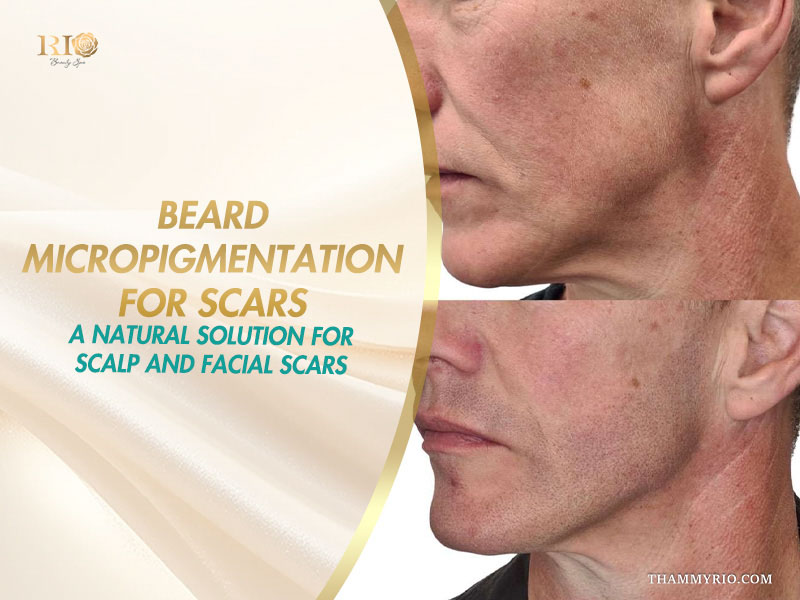
Many men attempt to compensate by growing longer surrounding hair, applying temporary cosmetic pencils that easily smudge under perspiration, or considering expensive, unpredictable repeat transplant surgeries. Modern restorative aesthetics now delivers an authentic, non-invasive alternative: beard micropigmentation for scars. By precisely depositing biocompatible, organic pigment micro-dots into the upper dermal layers, paramedical practitioners simulate natural follicular stubble, restoring dense, masculine definition across compromised tissue.
Why scars on the scalp and face become a cosmetic and emotional concern
Scars across the scalp and lower face present unique structural challenges because these anatomical regions are densely populated by hair and beard follicles. When deep physical trauma disrupts the dermis, the delicate follicle units are replaced by dense fibrous collagen, preventing natural hair or beard growth from ever returning.
Scars from hair transplant (FUT/FUE) and beard transplant (FUE)
Surgical hair and beard restoration techniques frequently leave distinct structural marks across donor and recipient zones:
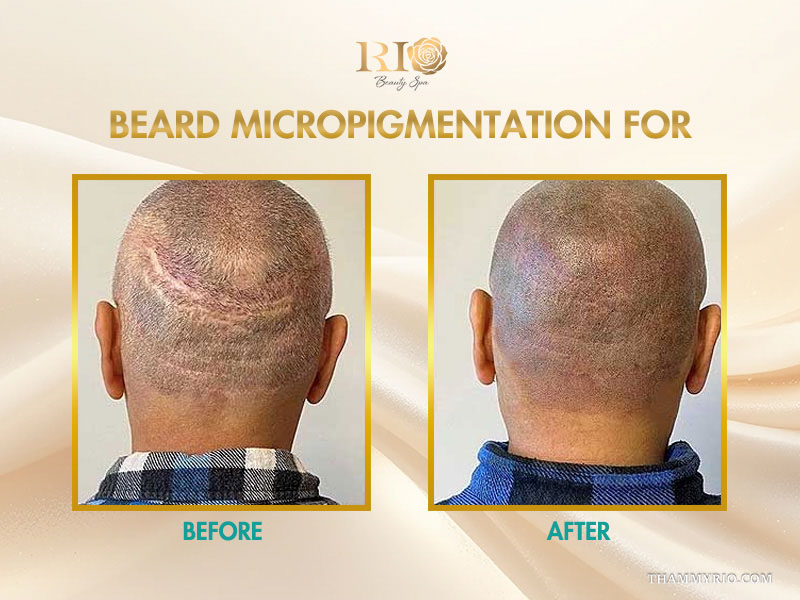
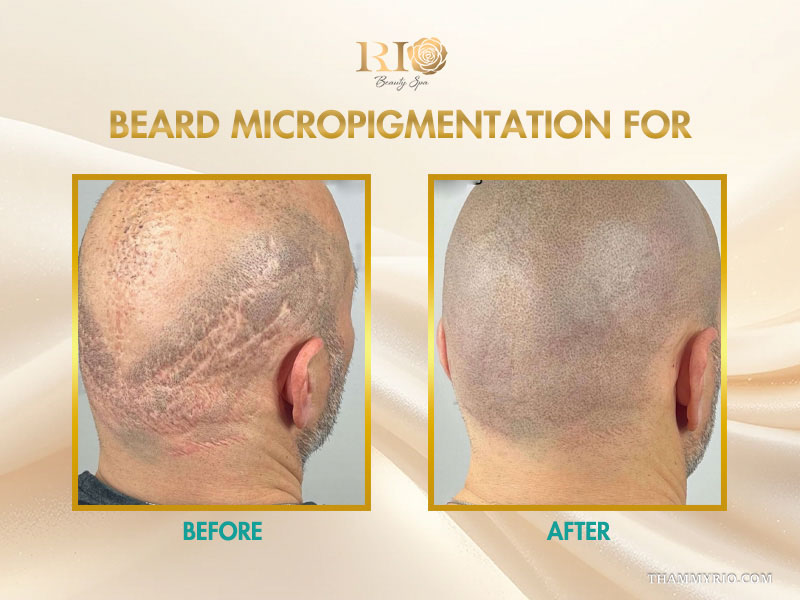
- Follicular Unit Transplantation (FUT) strip scars: Traditional strip harvesting removes a linear ribbon of scalp from the occipital region, leaving a prominent horizontal white scar across the back of the head. This permanent track prevents men from wearing modern fade haircuts or shorter styles.
- Follicular Unit Extraction (FUE) punch scars: While marketed as minimally invasive, FUE harvesting leaves hundreds of micro-dot circular hypopigmented scars across the donor area, resulting in an uneven, moth-eaten visual texture.
- Failed or sparse beard transplants: Punch-graft extractions transplanted into the chin or cheeks often yield patchy survival rates, leaving subtle cobblestone scarring and irregular, bare gaps. Applying micropigmentation for hair transplant scars effectively neutralizes this contrast, visually filling empty donor areas.
Burn scars, accident scars, and surgical scars on the head and face
Accidental trauma from road collisions, sports lacerations, industrial injuries, and thermal burns commonly results in wide, irregular patches of hypopigmented tissue across the scalp and facial hair areas. These injuries create noticeable, asymmetrical gaps across the sideburns, mustache, or beard line.
Similarly, pediatric neurosurgical interventions, cleft lip repairs, and aesthetic skin incisions leave rigid, pale fibrous tracks. Utilizing scalp micropigmentation for burn scars and dedicated facial camouflage techniques restores chromatic uniformity across these compromised areas, ensuring bare tissue no longer catches the eye.
Emotional impact of visible scars in daily life
A sharp, well-defined beard and a balanced hairline have long symbolized masculine vitality, symmetry, and confidence. When accidental trauma or surgical procedures disrupt these features, the emotional toll can be substantial.
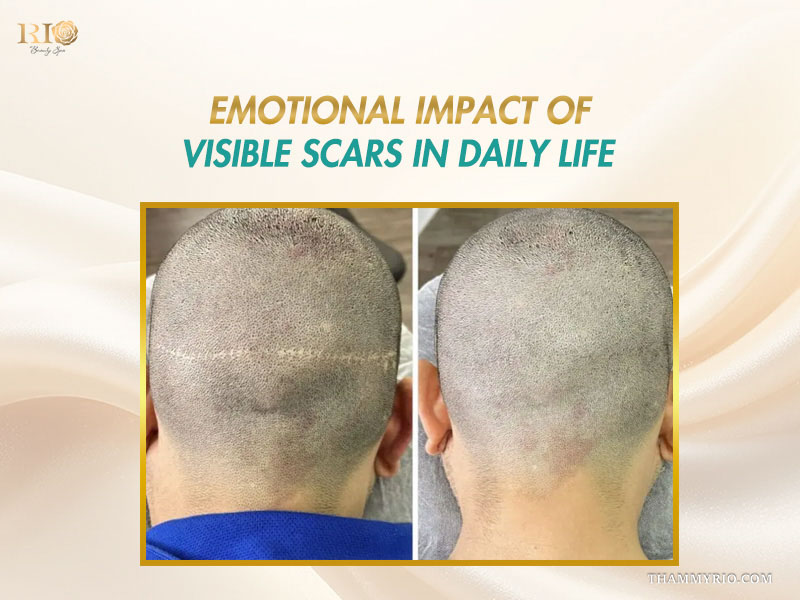
Many men report avoiding bright overhead lighting, feeling insecure during close face-to-face business interactions, or feeling confined to high collars and facial hair lengths that fail to hide the underlying issue. The primary value of facial scar camouflage through beard micropigmentation for scars is not merely aesthetic vanity; it restores a grounded sense of personal wholeness and masculine confidence.
Who is a suitable candidate for scalp and beard micropigmentation for scars?
Not every scarred surface is immediately ready for ink micro-implantation. Determining candidacy requires careful clinical evaluation of tissue maturity, structural elevation, and vascular activity to ensure safe pigment retention and natural-looking results.
Flat, pale, or hypopigmented scars on scalp and face
The ideal candidate presents with fully matured scar tissue that is pale, white, or hypopigmented relative to the surrounding healthy skin. Chronologically, the scar must be at least 9 to 12 months old. At this stage, the inflammatory remodeling phase is complete, cellular blood flow has stabilized, and the dermal architecture is settled.
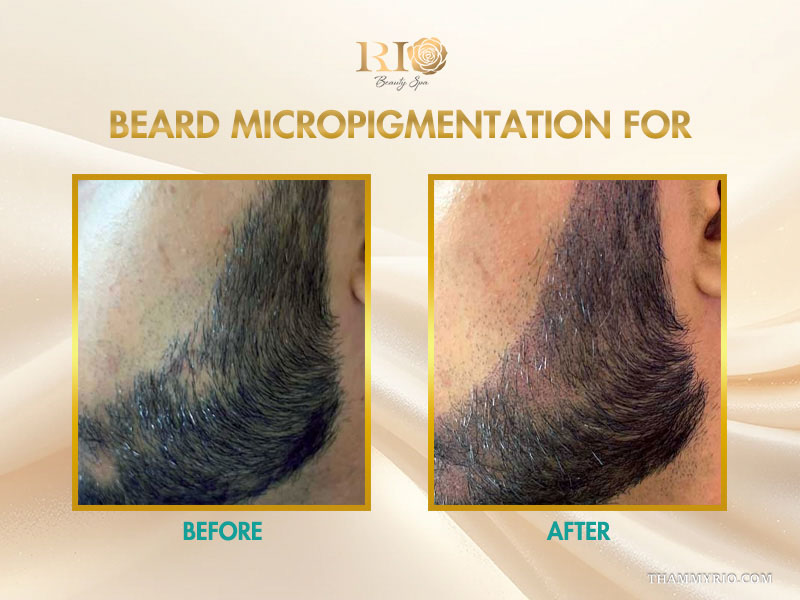
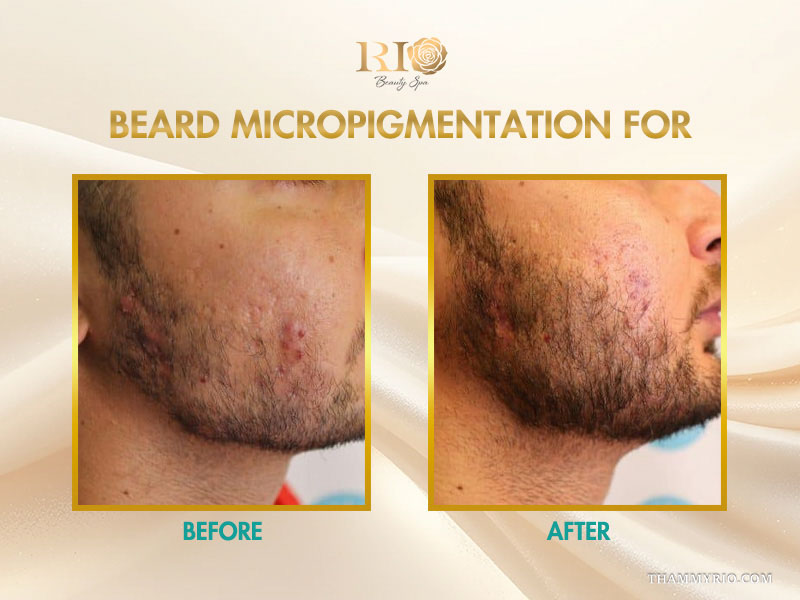
When scalp micropigmentation for scars or beard micropigmentation for scars is applied to mature, level tissue, the implanted pigment droplets heal with crisp optical definition, accurately mimicking the diameter and visual depth of real emerging beard stubble.
Scars from FUE/FUT hair and beard transplants
Men who have undergone surgical hair or beard restoration and wish to wear shorter hairstyles represent an ideal category for beard micropigmentation for scars. Whether concealing circular punch scars scattered throughout donor zones or breaking up wide linear strips across the nape, targeted micro-pointillism restores visual density.
By implanting custom color-calibrated pigment deposits into each pale scar void, micropigmentation for hair transplant scars eliminates harsh optical contrast, making donor and recipient areas blend seamlessly with natural hair growth.
Cases where micropigmentation is not recommended
Ethical paramedical practice requires identifying clinical contraindications where treatment must be postponed or avoided:
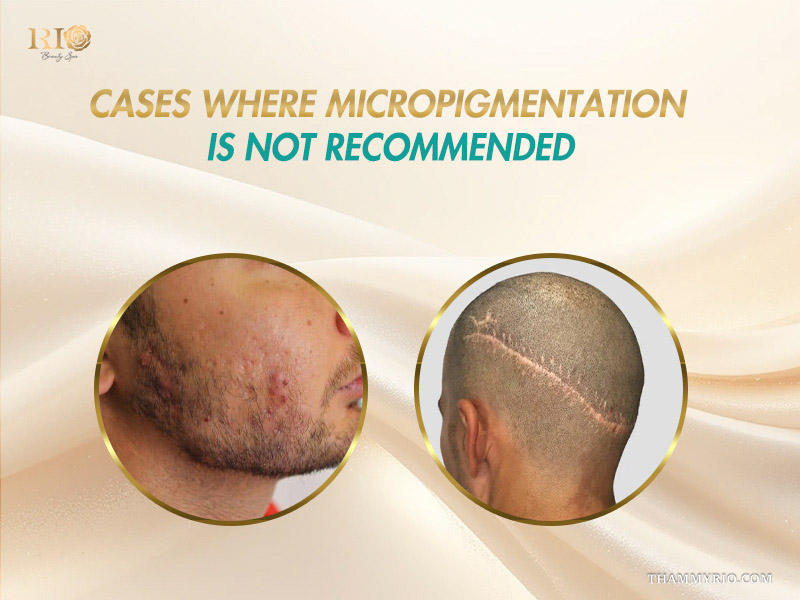
- Active keloids or unstable hypertrophic scars: Scar tissue that is actively proliferating, thick, raised, or itchy must not be treated with micro-needling, as mechanical stimulation can trigger aggressive collagen overgrowth.
- Active erythema (pink or red tissue): Scars showing vascular redness are still undergoing biological remodeling; introducing pigments into inflamed tissue causes uneven retention and color distortion.
- Active inflammatory skin conditions: Active folliculitis, severe cystic acne, localized dermatitis, or psoriasis within the treatment perimeter must be resolved before proceeding.
In cases where raised texture or discoloration is present, the area requires preliminary structural laser smoothing before beard scar camouflage can be safely performed.
Understanding the technical mechanics of beard and scalp scar camouflage
Simulating authentic facial and cranial hair follicles across scarred tissue demands precise technical skill that differs substantially from standard cosmetic micropigmentation. Facial skin undergoes constant muscular articulation and exhibits varied sebaceous activity, while scar tissue is dense, fibrotic, and inelastic.
Micro-follicle pointillism versus decorative tattooing
Standard body tattooing relies on deep needle penetration (1.5mm to 2.5mm) into the reticular dermis, depositing dense ink blocks intended to provide bold, saturated contrast. However, when deep needles strike dense, poorly vascularized scar tissue, pigment blowout frequently occurs—a complication where ink pools uncontrollably beneath the fibrotic matrix, creating muddy blue or grayish blotches.
In contrast, advanced beard micropigmentation for scars utilizes specialized single-point micro-needles oscillating at controlled frequencies to deposit pigments strictly into the basal epidermis and upper papillary dermis (0.3mm to 0.5mm). This micro-pointillism technique replicates individual follicular units, ensuring clean margins that mirror natural stubble without risking tissue damage.
Undertone science and carbon-free organic pigment chemistry
Human facial hair roots do not reflect a single shade of black or brown; under daylight, clean-shaved beard follicles appear as cool charcoal, slate, or soft ash tones against the skin. Conventional decorative tattoo inks contain heavy metallic oxides that can oxidize under sunlight, shifting into unnatural greenish or blue hues over time.
Paramedical facial scar camouflage with micropigmentation relies exclusively on certified organic pigments formulated without heavy metals. These specialized blends resist unwanted color shifts, ensuring that SMP for beard scars ages gracefully, fading naturally on-tone in step with cellular turnover.
Why Rio Beauty Clinic stands out for scalp and beard micropigmentation
Executing delicate paramedical procedures requires extensive practical experience, advanced diagnostic tools, and a proven track record of handling complex tissue cases. Established in 2003 in Hanoi, Rio Beauty Clinic has spent more than two decades pioneering corrective micropigmentation and dermal laser applications in Vietnam.
Expert Tran Manh Thang: pioneer of scalp micropigmentation in Vietnam
The clinical foundation of Rio’s paramedical excellence is led by Expert Tran Manh Thang, recognized across Vietnam as a leading pioneer in scalp micropigmentation and corrective skin camouflage. With over 20 years of hands-on experience in laser technology and aesthetic pigment restoration, he is the creator of specialized hairline SMP and Hairstroke scalp services in Vietnam.
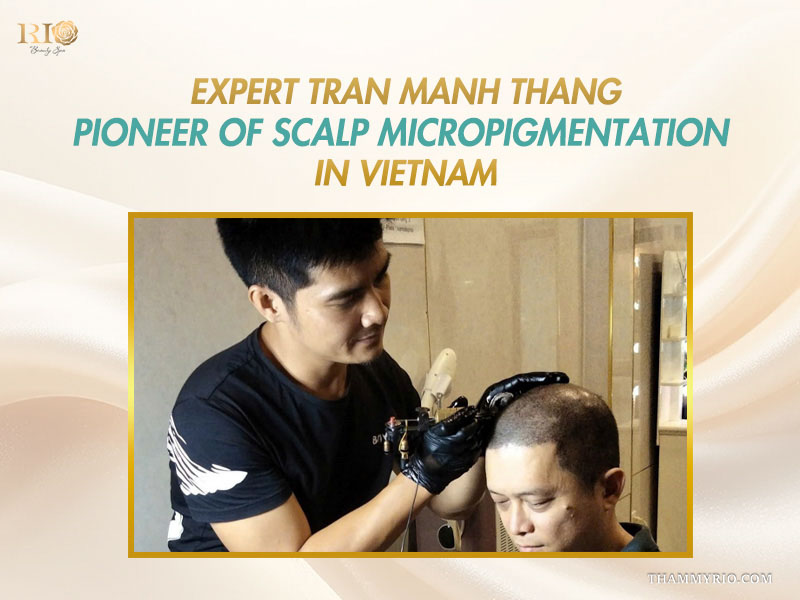
As Director of Erutech Vietnam, he trains doctors, clinic owners, and technicians nationwide in laser safety and aesthetic protocols. His deep understanding of dermal tissue dynamics ensures that complex beard micropigmentation for scars procedures are performed with absolute precision.
CEO Pham Thanh Tam: dermatology-backed clinical governance
All procedural safety protocols at Rio Beauty Clinic are established under the direct clinical oversight of Artist Grand Master Pham Thanh Tam (CEO). Bringing more than 16 years of expertise in clinical dermatology and aesthetic PMU, Master Tam Aly (international competition judge and Master Seoul Cup Winner 2022) designs personalized treatment roadmaps for every client.
Her clinical guidance ensures that each client’s skin profile, tissue elasticity, and follicular density are thoroughly evaluated, guaranteeing that beard micropigmentation scar camouflage achieves seamless biological compatibility without compromising the skin barrier.
Master Artist Mely Thao: international champion of delicate tissue restoration
Direct procedure execution is spearheaded by Master Artist Mely Thao, an internationally acclaimed PMU educator with over 16 years of specialized experience. Recognized as the PMU Champion in Singapore 2025 and Chief Judge at the Asia PMU Beauty Festival 2024, she is widely celebrated for her refined needlework.
Her gentle micro-stippling technique—often described by clients as “tattooing as if not tattooing”—ensures that sensitive facial and cranial tissues receive precise pigment deposits without discomfort, swelling, or trauma.
Rio Laser Ultra Series: correcting failed micropigmentation
A major clinical advantage of Rio Beauty Clinic is its in-house high-tech ecosystem. When clients arrive with botched, discolored, or blown-out scalp and beard tattoos from uncertified providers, direct pigment application is impossible. Rio utilizes the proprietary Rio Laser Ultra Series—an elite trio of laser platforms featuring certified Nd:YAG Spectra, Ruby Laser Alpha6, and advanced Picotech platforms.
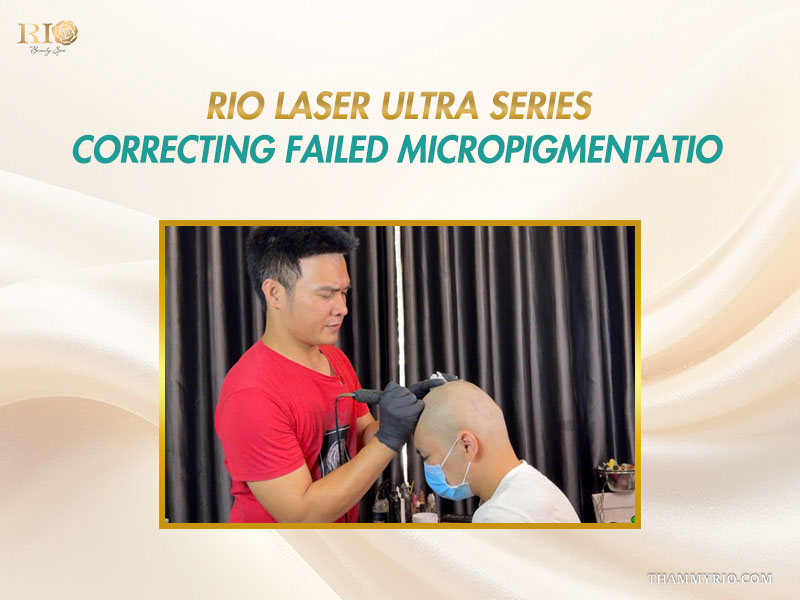
These systems safely shatter old, oxidized ink clusters and remodel rigid scar cords without causing thermal burns or surface scars. Once the skin is clear and smooth, applying a beard tattoo for scars produces clean, natural results.
Additionally, the clinic integrates the technology Rio vascular laser system to neutralize micro-capillary redness, transitioning scars into a stable state ready for pigment implantation.
International standards and organic pigments
Rio operates modern equipment certified under rigorous global benchmarks, including FDA (USA), CE (Europe), ISO 13485, and EMA standards. The clinic avoids cheap industrial inks, using only 100% certified organic pigments imported directly from premier laboratories in Germany, the USA, and South Korea (such as Perma Blend, Kokkai, Labina, and Cello).
These formulations are free of heavy metals and carcinogenic amines, remaining biologically stable and hypoallergenic across all skin types.
Step-by-step clinical protocol for beard and scalp scar camouflage at Rio
To deliver consistent, natural results while prioritizing tissue safety, Rio Beauty Clinic implements a strict four-stage clinical pathway for every beard micropigmentation for scars client:
- 1-on-1 scar analysis, tissue flexibility testing, and follicle mapping: The specialist examines the scar’s vascular maturity, collagen density, and surrounding follicle direction under cross-polarized light. A custom pigment recipe is formulated to match the client’s natural stubble shade.
- Advanced topical numbing and skin surface preparation: The treatment site is prepared with medical-grade antiseptic solutions, followed by high-potency topical aesthetic balms. This ensures the procedure remains comfortable, even on sensitive areas like the upper lip, chin, or mastoid zones.
- Gentle micro-pigmentation using precision digital rotary needles: Using digital rotary handpieces, the practitioner implants fine pigment micro-droplets into the basal layer. Stippling density is carefully calibrated to mirror natural follicular grouping, blending the scar into the surrounding beard or hair.
- Protective aftercare with German Tattoo Pill and official written warranty: The treated area is conditioned with Tattoo Pill aftercare cream, a specialized soothing formula imported from Germany. Formulated with panthenol, essential fatty acids, and anti-inflammatory botanicals, it locks in pigment deposits and accelerates epidermal recovery. Clients receive comprehensive home care instructions, an official written warranty, and access to Rio’s dedicated aftercare support.
Understanding scar camouflage investment and service value
When evaluating your options, reviewing the skin tone tattoo cost helps you weigh the long-term value of professional treatment against temporary cosmetic cover-ups. Choosing a dedicated skin tone tattoo procedure represents an investment in expert master artistry, certified medical-grade safety, and lasting peace of mind.
The total cost of your treatment plan depends on several case-specific variables:
- Surface area dimensions: Small, localized chin or mustache scars require fewer pigment units and less procedural time than expansive bilateral jawline scars or wide FUT donor tracks.
- Tissue texture complexity: Dense, rigid scars may require preliminary laser smoothing sessions with the Rio Laser Ultra Series, which adjusts the overall treatment timeline.
- Number of refinement sessions: Because fibrotic scar tissue absorbs pigment differently than normal skin, most protocols include an initial pass followed by a refinement session at 4 to 6 weeks to ensure balanced, natural density.
At Rio Beauty Clinic, pricing is completely transparent, with no hidden fees. Clients receive direct treatment from recognized industry masters who use only 100% certified organic pigments and hospital-grade sterilization protocols.
Furthermore, Rio offers an official written warranty—including complimentary touch-up support within the first 12 months—along with an exclusive 10% loyalty discount for returning clients across all clinical services.
Essential pre-care and post-care guidelines for optimal follicle retention
Achieving clean, long-lasting results from beard micropigmentation for scars requires careful preparation and diligent aftercare. Following these professional guidelines ensures optimal pigment retention and smooth epidermal healing.
Pre-procedure preparation checklist
- Avoid direct sun exposure, tanning beds, and chemical peels on the face or scalp for at least 2 weeks prior to your appointment.
- Do not shave the treatment area with a close razor blade on the day of the procedure; trim hair or beard stubble to a short grade (0.5mm) so the specialist can assess natural follicle direction.
- Refrain from alcohol, excessive caffeine, and blood-thinning supplements for 24 to 48 hours to minimize skin sensitivity.
- Ensure the treatment area is clean and free of topical creams, styling products, or cosmetic concealers on the day of your session.
Post-procedure recovery phases and proper aftercare
Healing progresses through several predictable biological stages:
- Days 1–3 (Surface Settling): Mild pinkness and slight tenderness are normal. Keep the treated area clean and dry. Avoid direct water contact, hot showers, saunas, and strenuous exercise that causes heavy sweating.
- Days 4–7 (Micro-Flaking): As the epidermis regenerates, fine, powdery flakes will shed naturally. Apply a thin layer of imported Tattoo Pill cream twice daily to protect the healing skin barrier. Never pick, scratch, or scrub flaking skin, as this can dislodge pigment particles.
- Weeks 2–4 (Color Stabilization): The initial micro-dots soften as the organic pigments settle into the upper dermis, revealing a balanced, natural stubble tone.
- Sun Protection: Once fully healed, apply a broad-spectrum SPF 50 sunscreen over the area when outdoors to protect pigment longevity and maintain a seamless blend.
Frequently asked questions about beard and scalp scar micropigmentation
Does beard micropigmentation for scars damage remaining natural hair follicles?
No. The micro-needles used in beard micropigmentation for scars penetrate only into the upper papillary dermis (0.3mm to 0.5mm). Natural hair and beard follicle roots reside much deeper within the reticular dermis and subcutaneous layer (1.5mm to 4.0mm). The procedure safely deposits pigment between existing hair shafts without disrupting active follicles.
How long does beard scar camouflage last before needing a touch-up?
High-grade organic pigments generally maintain crisp color fidelity for 3 to 5 years, depending on individual skin metabolism, facial washing habits, and sun exposure. Because Rio uses carbon-free, metal-free formulations, the pigment softens naturally on-tone over time rather than shifting into unnatural blue, green, or red shades. Periodic touch-ups can maintain your results indefinitely.
Can micropigmentation conceal deep, indented, or raised beard scars?
Micropigmentation restores chromatic balance; it creates the visual illusion of hair follicles, but it does not physically level raised tissue or fill deep indentations. For uneven scars, Rio Beauty Clinic first utilizes laser resurfacing platforms, such as the Rio Laser Ultra Series, to smooth and flatten the scar tissue before applying camouflage pigments.
Visible facial lacerations, patchy beard gaps, and surgical transplant scars should never undermine your confidence or masculine identity. Choosing a tailored beard micropigmentation for scars treatment offers a safe, predictable, and non-invasive path to restoring a sharp, natural-looking beard contour and balanced hairline.
With over two decades of aesthetic leadership in Vietnam, Rio Beauty Clinic combines advanced laser preparation, certified organic pigments, and master-level artistry to deliver discreet, natural results. Contact our specialists today to schedule your private consultation and take the first step toward restoring your skin.
Thẩm Mỹ Rio Beauty Clinic
- Address: 205 Thuy Ke, Tay Ho, Ha Noi
- Email: Telesale.riostudio1@gmail.com or thammyrio999@gmail.com
- Hotline & WhatsApp: +8496.694.1999 or +84963.246.533
- Instagram: https://www.instagram.com/tham.my.rio.beauty.clinic/
- Fanpage: https://www.facebook.com/thammyriobeauty


 “Phạm Thanh Tâm” Đã kiểm duyệt nội dung
Có thể bạn quan tâm:
Scalp micropigmentation for scars: a practical guide
Living with scars on your head can affect your self-confidence, especially
Expert scalp micropigmentation after hair transplant
A hair restoration procedure is a significant step toward regaining your
Scalp micropigmentation pricing: 2027 guide
Understanding scalp micropigmentation pricing is a vital step for anyone considering
Flawless stretch mark camouflage tattoo: Best technique
Are you tired of feeling self-conscious about visible lines on your
Beard micropigmentation: Fuller beard without surgery
A dense, well-defined beard has long been a symbol of masculinity
Top skin camouflage tattoo in Hanoi for clear skin
Living with scars, stretch marks, or uneven skin pigmentation can affect