


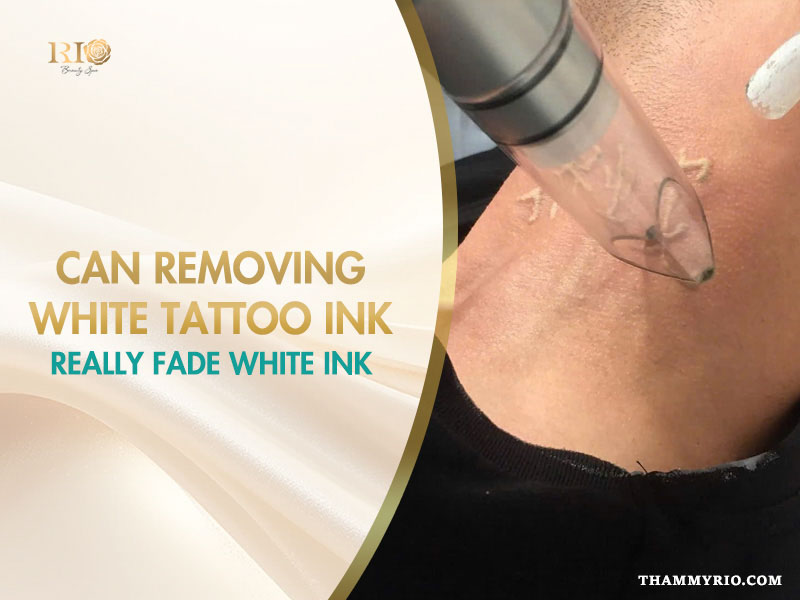
Ever looked at your pale ink and wondered if it holds a secret plan to outlive you? Removing white tattoo ink presents a unique challenge, often leaving ink enthusiasts feeling stuck with faded or discolored art. This article explores the science behind fading pale ink, providing you with clear insights into how advanced technology interacts with titanium dioxide. Let us dive into the facts and explore how expert techniques guide your ink fading journey.
What makes white ink unique in removing white tattoo ink compared to darker pigments
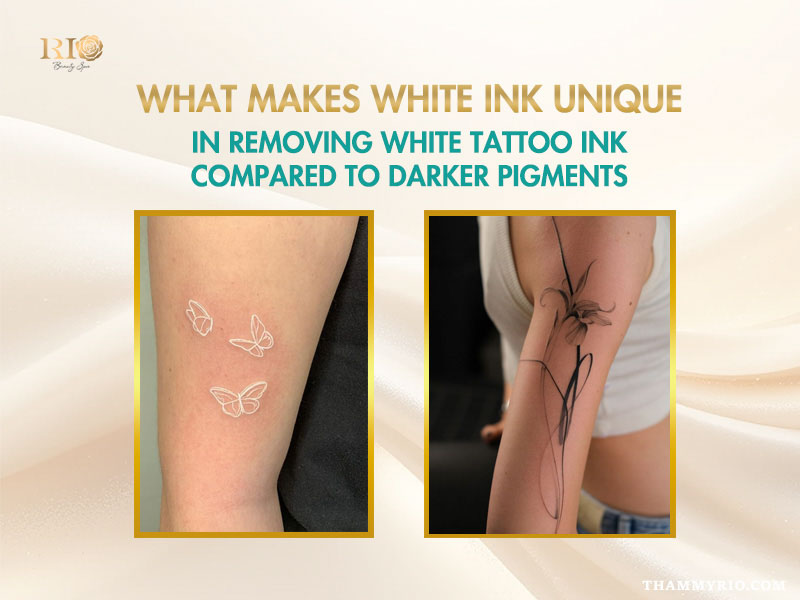
Darker shades like black or navy blue absorb laser energy efficiently, breaking apart quickly. Removing white tattoo ink requires navigating a completely different physical reaction within the dermal layer. Pale ink acts like a microscopic mirror, bouncing laser light away instead of absorbing it for destruction.
Furthermore, lasers can trigger a chemical reaction called oxidation when hitting titanium dioxide. This reaction can cause the ink to temporarily turn gray or brown, creating a darker appearance before it eventually fades. You can explore more about color tattoo removal to grasp how different pigments react to light.
Understanding this oxidation risk prevents panic if your pale design temporarily darkens after a session. Professionals anticipate this shift and adjust their equipment parameters to counteract the chemical change. Consequently, the strategy shifts from simple pigment shattering to managing a complex chemical transformation.
Strategic approaches for effective white tattoo removal
Approaching this challenge requires customized strategies rather than a one-size-fits-all solution. White tattoo removal relies heavily on selecting the correct wavelength and pulse duration to shatter light-reflecting particles. Experts often combine fractional resurfacing with picosecond technology to create microscopic channels in the skin.
These channels allow trapped pigment to escape while minimizing thermal damage to surrounding tissues. The correct combination of techniques accelerates the fading timeline while preserving skin texture. Let us review the primary technological methods utilized in modern fading procedures.
| Technology / Approach | Mechanism of Action | Expected Outcome |
| Picosecond Technology | Delivers ultra-short energy bursts to shatter pigment mechanically | Gradual fading of pale ink with reduced thermal impact |
| Fractional Resurfacing | Creates micro-channels in the skin structure | Enhances pigment clearance and supports skin recovery |
| Q-Switched Wavelengths | Uses specific light spectrums targeting trace metals | Breaks down mixed inks often blended with pale pigments |
| Patch Testing | Applies energy to a small area before full sessions | Predicts oxidation risk and guides parameter selection |
What realistic results look like in white tattoo removal
Visualizing the final outcome requires understanding the timeline of skin recovery. White tattoo removal rarely results in instant vanishing after a single session. Banishing unrealistic expectations keeps you motivated throughout the multi-step journey.
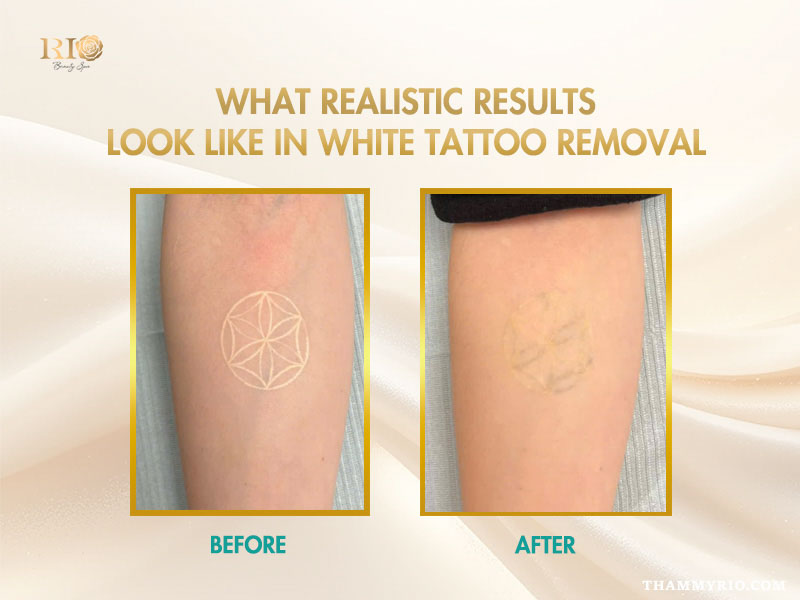
Initially, the area might appear slightly darker due to the oxidation process mentioned earlier. Over several months, the body’s immune system slowly flushes away the fragmented pigment particles. Therefore, patience remains your most valuable asset during the entire fading journey.
You should track your visual changes closely to monitor the gradual breakdown of the pigment. Reviewing realistic tattoo removal progress gives you a benchmark for your own fading timeline. Consistent intervals between sessions allow your lymphatic system to perform its clearing duties efficiently.
Key factors that affect white tattoo removal results
Several hidden variables dictate how well your skin responds to the fading process. White tattoo removal outcomes depend heavily on the depth of ink placement and the specific chemical brand used by the artist. Professional artists often pack pale ink deeply and densely to make it visible, creating a dense barrier for lasers.
Additionally, your body’s lymphatic system efficiency dictates how quickly shattered pigment gets eliminated from the area. Hydration, healthy habits, and proper circulation speed up this natural clearance phase. Exploring the mechanics of various laser tattoo removal lasers offers deeper insight into equipment capabilities.
The location of your ink also plays a pivotal role in the fading speed. Areas closer to the heart usually fade faster due to stronger blood flow and lymphatic drainage. Thus, a design on your chest will likely diminish quicker than one on your ankle.
Professional safety protocols for removing white tattoo ink at Rio Beauty Clinic
Removing white tattoo ink demands a highly controlled environment to prevent adverse reactions. The laser tattoo removal journey at Rio Beauty Clinic strictly adheres to international safety standards. We utilize advanced equipment certified by CE, TUV, FDA, and ISO 13485 to protect your skin.
Our specialists perform detailed patch tests to predict how your specific pigment will react to light energy. This meticulous preparation prevents unexpected darkening and protects the structural integrity of your skin. We prioritize your comfort and safety above all else during every visit.
Removing white tattoo ink requires careful calibration when transitioning from general protocols to specific energy adjustments for sensitive areas.
Customized energy settings for white tattoo removal on delicate skin areas
Skin thickness varies dramatically across different parts of the body. Adjusting parameters for small tattoo removal requires immense precision to avoid unnecessary tissue damage. We recognize the delicate nature of areas like the wrist or collarbone.

Grand Master Pham Thanh Tam oversees the calibration of our exclusive Rio Laser Ultra Series to ensure gentle yet effective energy delivery. These tailored settings protect fragile areas while still providing enough acoustic power to shatter stubborn titanium dioxide. This level of customization separates premium services from standard procedures.
Expert assessment of white tattoo removal progress
Evaluating the fading timeline requires a trained eye and deep understanding of dermal science. Expert Tran Manh Thang regularly reviews each client’s response to the Spectra ND Yag Laser and Picotech Advance Laser. Consistent monitoring guarantees optimal adjustments at every phase.
This continuous oversight allows our Master Artists to modify wavelengths based on the pigment’s shifts during the oxidation phase. Such rigorous attention to detail ensures every session moves you closer to your aesthetic goals. You receive continuous support and guidance throughout the entire fading process.
Ready to start fading your unwanted ink safely? Contact Rio Beauty Clinic System for professional cosmetic tattoo services and expert advice today.
Hotline and WhatsApp: +84 966 941 999 or +84 963 246 533
Email: Telesale.riostudio1@gmail.com
Instagram: https://www.instagram.com/tham.my.rio.beauty.clinic
Fanpage: Rio Beauty Clinic






Có thể bạn quan tâm:
Can removing white tattoo ink really fade white ink
Ever looked at your pale ink and wondered if it holds
Laser tattoo removal is it safe for most people
Ever looked at an old piece of body art and pondered
Before and after laser treatment results you can expect
Visualizing a renewed version of your skin starts with understanding the
Tattoo removal redness what your skin is trying to tell you
Ever noticed your skin flushing a vivid crimson right after a
Tattoo removal session by session: What changes
Deciding to part ways with permanent ink marks the beginning of
Tattoo removal itchy? What your skin is telling you
Have you ever noticed your skin throwing a tiny, annoying temper